Deaf
1986
No user ratings available yet
Representation score: 7.3 out of 10
Representation Score
Good
1954
ApprovedDirector
Lindsay Anderson, Guy Brenton
Runtime
21 minutes
Average Rating
No ratings yetNew Showbiz Analysis
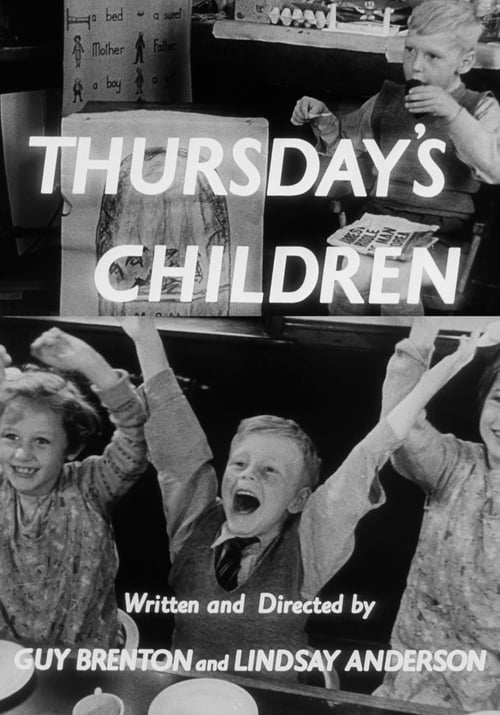
Thursday's Children stands out as a significant historical work for its sophisticated portrayal of sensory disability. By emphasizing the intellectual growth and communicative triumphs of the students, the film moves beyond mere clinical observation to celebrate individual capability. However, the film is limited by the era in which it was produced. It lacks multi-layered breadth, showing a notable absence of racial, ethnic, or LGBTQ+ diversity, reflecting the demographic homogeneity of 1950s Britain. Ultimately, the film succeeds by disrupting the traditional medical model of disability. It replaces institutionalized 'othering' with a humanistic focus on the dignity and courage of the children.
Category Breakdown
The film focuses entirely on the educational journey of children at The Royal School for the Deaf. There are no explicit LGBTQ+ characters or narratives present.
The narrative centers on the shared developmental struggles of the students. It avoids reinforcing patriarchal dominance by focusing on individual communication rather than gendered social roles.
Reflecting the demographic homogeneity of 1954 Britain, the film lacks a multi-ethnic cast. The representation aligns with the specific Anglo-Saxon context of the Kent setting.
The film uses a humanistic lens to prioritize individual resilience. Richard Burton’s poetic narration elevates the subject from clinical observation to a nuanced study of human experience.
The documentary excels by highlighting the active ability to act of the children. It avoids pity, instead focusing on the technical and cognitive labor required to master speech and lip-reading.
Present on Screen
Limited or Absent
Official Synopsis
Won the Academy Award for the Best Documentary Short of 1954. The subject deals with the children at The Royal School for the Deaf in Margate, Kent. The hearing-handicapped children are shown painstakingly learning what words are through exercises and games, practicing lip-reading and finally speech. Richard Burton's calm and sometimes-poetic narration adds to the heartwarming cheerfulness and courage of the children. Preserved by the Academy Film Archive in partnership with British Film Institute in 2005.
1986
2016
1992
2002
1960
1962
1986
1986
No reviews yet. Be the first to share your thoughts on this movie!
Use the rating form above to leave a star rating and optional review.