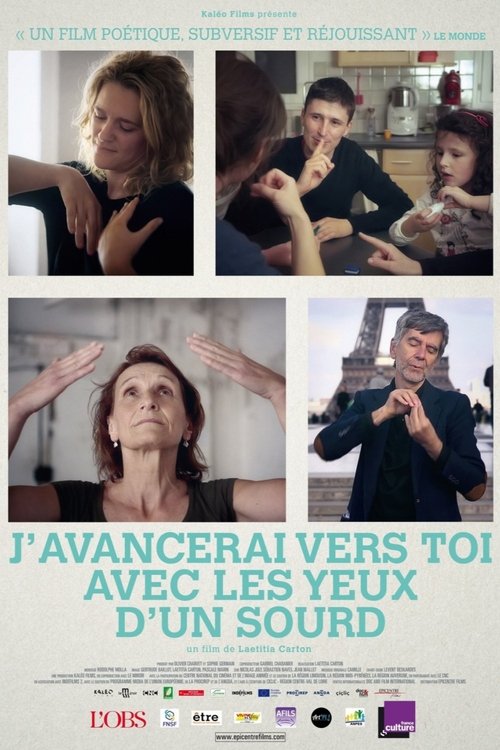
I'll Come to You with Deaf Eyes
2016
No user ratings available yet
Representation score: 8.5 out of 10
Representation Score
Good
1992
UnratedDirector
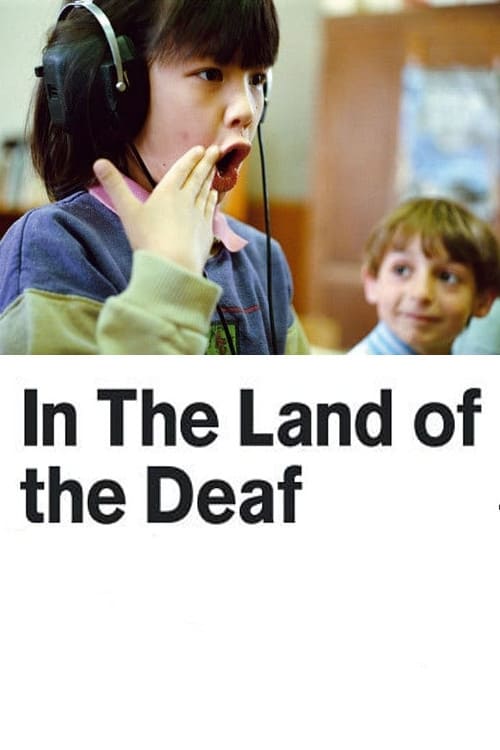
Nicolas Philibert
Runtime
99 minutes
Average Rating
No ratings yetNew Showbiz Analysis
Nicolas Philibert’s documentary shines by focusing on the everyday lives of the Deaf community through an observational lens. By treating sign language as a primary means of communication, the film questions the dominance of spoken language and hearing-centric social structures. The film excels in representing disability authentically, offering genuine insights into the lives of its subjects without falling into the trap of inspirational stories. It invites viewers into a unique sensory world where visual and tactile cues shape interactions. While the film does not explicitly address LGBTQ+ or diverse racial backgrounds, its commitment to the social model of disability offers a critical look at the barriers faced by the Deaf community in mainstream society.
Category Breakdown
The film focuses on the Deaf community and does not emphasize explicit LGBTQ+ storylines. It avoids traditional assumptions about straight relationships by highlighting linguistic communication instead.
Both men and women are shown with equal influence in their community. The film avoids strict gender roles by emphasizing the shared experience of deafness.
The cast seems mostly uniform in terms of ethnicity. However, the film highlights the unique perspective of the Deaf community, which is often overlooked by the hearing world.
The film challenges the dominance of spoken language by showcasing sign language. This disrupts the usual social norms and questions the universality of standard communication methods.
The film provides a powerful depiction of deafness as a valid cultural identity, avoiding the pitfall of portraying it as a condition to be overcome.
Present on Screen
Limited or Absent
Official Synopsis
Anyone who has ever ventured to the "Land of the Deafs" will have been struck by the strangeness of the choreographed signs with which deaf people express themselves. Developed ages ago, these signs constitute a veritable language. As precise and subtle as speech, they are as effective as spoken language in making a declaration love or providing a detailed technical description. Jean-Claude, Jeanine, Eric, Cyril, Alain, Juliette, Guy, Aurélien and René have one thing in common - they are all profoundly deaf. So they dream, think and communicate in sign language. Which means that they see the world differently. Viewers embark with them on a discovery of the distant land of the deaf, where sight and touch assume enormous importance.
2016
2002
2007
1978

1971
2016
1986
2000
No reviews yet. Be the first to share your thoughts on this movie!
Use the rating form above to leave a star rating and optional review.