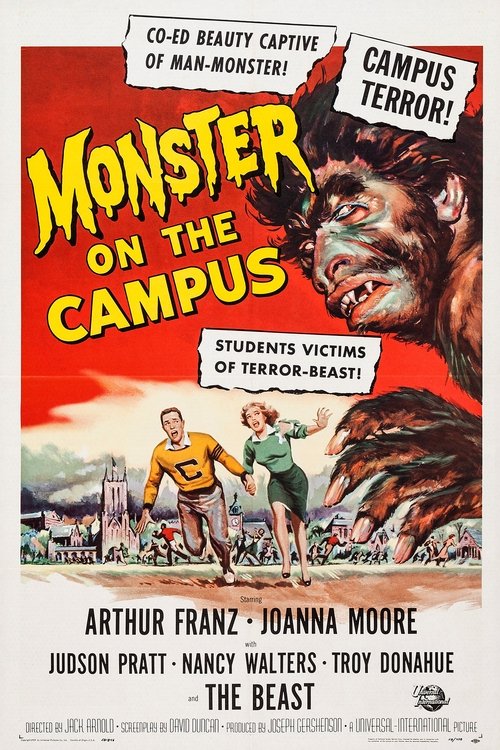
Monster on the Campus
1958
No user ratings available yet
Representation score: 1.5 out of 10
Representation Score
Minimal
1956
ApprovedDirector
John Sherwood
Runtime
79 minutes
Average Rating
No ratings yetNew Showbiz Analysis
This 1956 science fiction film is a conventional genre piece that adheres strictly to the social and cinematic conventions of its era. It uses the 'mad scientist' cliché to explore the ethics of biological experimentation without challenging traditional power dynamics. The production reflects the homogeneous casting and patriarchal structures typical of mid-century British cinema. It prioritizes a singular, traditionalist perspective on science and morality, lacking any intention to disrupt established social hierarchies or explore diverse identities.
Category Breakdown
There are no LGBTQ+ characters or stories that go beyond the assumption that everyone is straight or cisgender. The film sticks to the conventions of 1950s genre filmmaking.
Male characters hold most of the authority and play a significant role in driving the story. Female characters have minimal presence and do not challenge the established patriarchal structure of the scientific community.
The casting is homogeneous, following the patterns of 1950s British genre cinema. There are no non-white actors or protagonists to break the Anglo-centric norm.
The film operates within a traditional Western moral framework. It focuses on individual scientific responsibility rather than engaging with moral relativism or anti-establishment sentiments.
The central creature is portrayed as a monstrous antagonist rather than a character with ability to act. Physical differences are used as a source of horror rather than exploring the lived experiences of those with disabilities.
Present on Screen
Limited or Absent
Official Synopsis
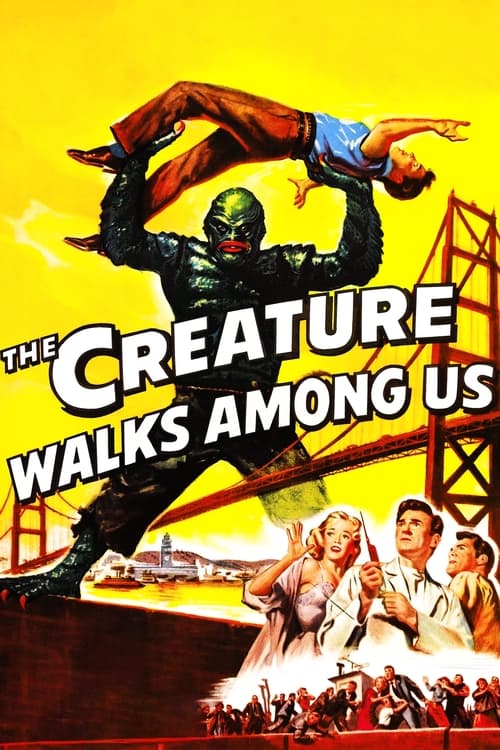
Scientists surgically transform the Creature into an air-breather, but being able to live on land is not enough to make him comfortable with humans. Enraged, he turns his wrath on anyone who comes near as he desperately tries to return to the deep-water world where he truly belongs.
1958
1969

1954
1960
1943

1954
1959
1932
No reviews yet. Be the first to share your thoughts on this movie!
Use the rating form above to leave a star rating and optional review.