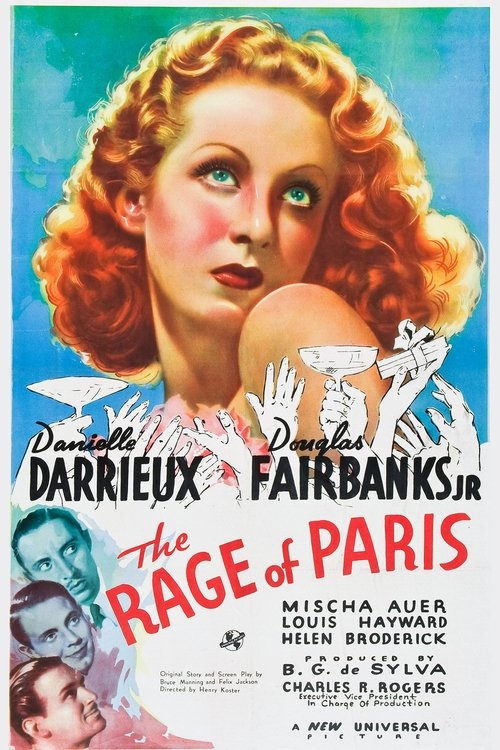
The Rage of Paris
1938
No user ratings available yet
Diversity score: 1.6 out of 10

1926
PassedDirector
John Francis Dillon
Runtime
70 minutes
Average Rating
No ratings yetSynopsis
Millionaire Robert Broadley, in order to curb his wive's enthusiasm for spending money foolishly, inform her that he is now broke and penniless, which might have been a good plan if a friend of his, with some crooked ways, hadn't gotten involved. A lost film.
Overall Score
Limited
Category Breakdown
LGBTQ+ Representation
The film lacks any evidence of non-heteronormative identities. The central conflict focuses on a husband and wife, adhering to a traditional romantic framework.
Gender Representation
The plot suggests a patriarchal hierarchy where the husband attempts to control his wife's spending through deception. This reinforces traditional gender roles rather than subverting them.
Racial & Ethnic Diversity
The film likely reflects the homogeneous casting standards of 1926. The synopsis provides no indication of a diverse cast beyond white, Western protagonists.
Religious & Cultural Diversity
The narrative reinforces Western values regarding the nuclear family and private capital. It functions as a cautionary tale about financial stewardship within a marriage.
Disability Representation
No information is available regarding the depiction of physical or neurodivergent characters. The film's lost status prevents any visual analysis of disability.
Strengths
Areas for Improvement
AI Analysis
Too Much Money is a conventional silent-era comedy that relies on established social and economic structures. The narrative centers on domestic friction and class-based misunderstandings, following a traditional trope of a wealthy patriarch exerting control through deception. The film reinforces the social norms of the 1920s, focusing on traditional marriage dynamics and the preservation of wealth. It lacks any visible attempts to challenge the era's standard gender hierarchies or racial homogeneity. Because the film is lost, its specific visual nuances remain unverified. However, the structural premise points toward a conservative storytelling approach typical of early Hollywood romantic comedies.
1938
1923
1927

1932
1928

1929
1926
1937

1927
1967

2017
1928
No reviews yet. Be the first to share your thoughts on this movie!
Use the rating form above to leave a star rating and optional review.