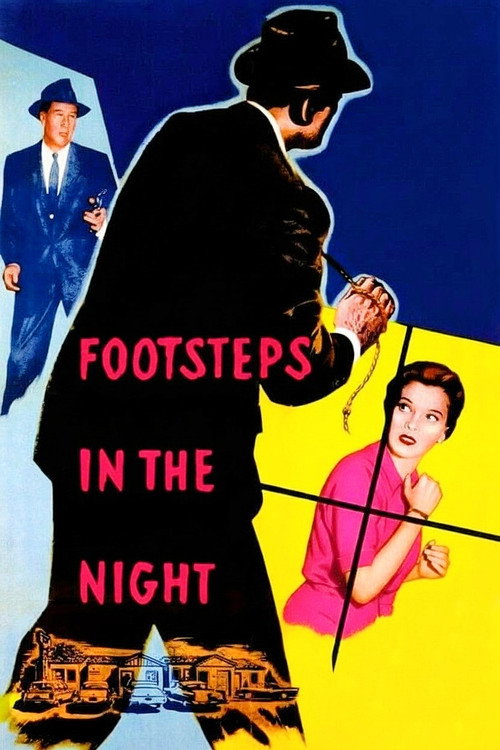
Footsteps in the Night
1957
No user ratings available yet
Representation score: 3.0 out of 10
Representation Score
Minimal
1964
NRDirector
Antonio Santean
Runtime
84 minutes
Average Rating
No ratings yetNew Showbiz Analysis
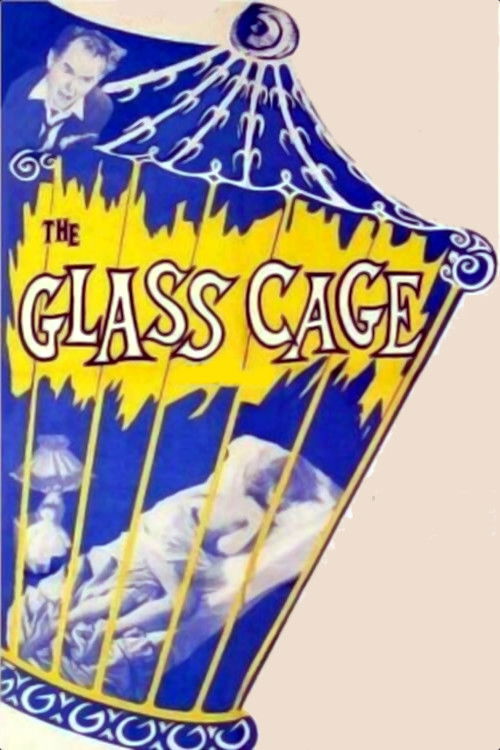
The Glass Cage is a conventional 1964 crime thriller that follows a standard procedural structure. It centers on detectives investigating a murder, a framework that prioritizes established social roles and traditional mystery clichés over multi-layered complexity. The film lacks representation across most diversity metrics, appearing to reflect the homogeneous social structures common in mid-century genre cinema. While a female character is central to the plot, she is framed through classic noir archetypes rather than empowered characterization. Ultimately, the narrative functions as a restorative piece focused on law enforcement, offering little subversion of traditional social hierarchies or cultural critiques.
Category Breakdown
The film does not include any queer narratives or non-straight relationships. There is no depiction of same-sex intimacy or gender non-conformity.
A female character is central to the plot as the main perpetrator. However, her role is framed through the 'mysterious woman' cliché, which often portrays women's ability to drive the story through deviant behavior.
The film does not indicate a diverse cast. The focus on local businessmen and detectives suggests a homogeneous social structure typical of 1964 genre filmmaking.
The film adheres to mid-century genre conventions without challenging Western institutions. The detective focus suggests a narrative centered on restoring social order.
There are no characters with visible or invisible disabilities mentioned in the film.
Present on Screen
Limited or Absent
Official Synopsis
Two detectives investigate the murder of a local businessman by a mysterious woman.
1957

1976

1953
1947
1957
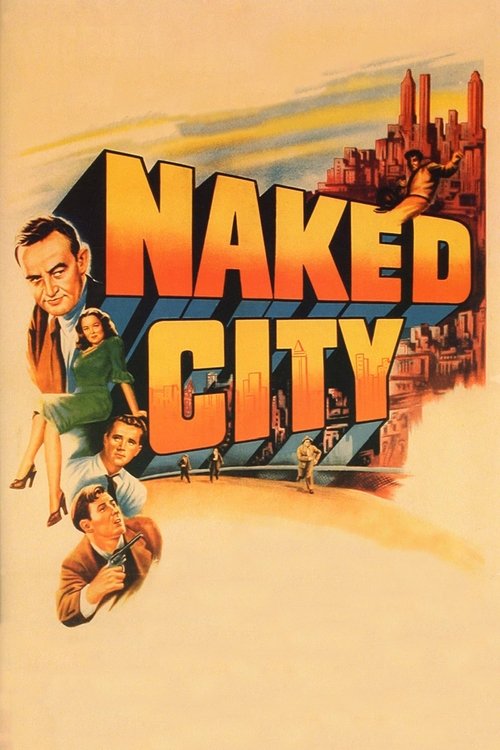
1948

1960

1964
No reviews yet. Be the first to share your thoughts on this movie!
Use the rating form above to leave a star rating and optional review.