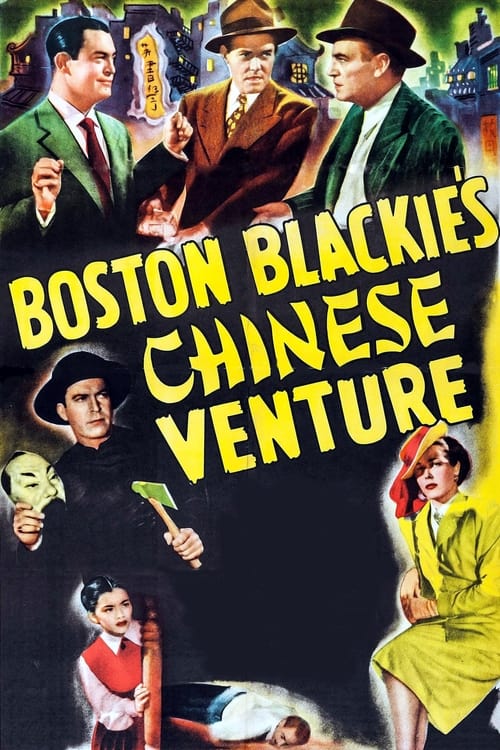
Boston Blackie's Chinese Venture
1949
No user ratings available yet
Representation score: 0.9 out of 10

Representation Score
Minimal
1953
Director
Seymour Friedman
Runtime
73 minutes
Average Rating
No ratings yetNew Showbiz Analysis
The Saint's Return is a conventional mid-century crime thriller that adheres strictly to the genre clichés of its era. The narrative is driven by individualistic masculine control, focusing on a private detective's quest for justice following a personal tragedy. Because the film operates within the rigid social constraints of 1953, it offers little in the way of diverse representation. It reinforces traditional romantic structures and demographic norms rather than challenging them. Ultimately, the film functions as a standard period piece that maintains the social and cultural status quo of the 1950s.
Category Breakdown
The story focuses on traditional heterosexual relationships. There are no characters with non-binary gender identities or critiques of the assumption that everyone is straight.
The film relies on the 'dead lover' archetype, where a female character serves as a catalyst for the male lead. This limits her role, defining her primarily through her relationship to the protagonist.
The film reflects the homogeneous, Anglo-centric casting typical of 1953 crime cinema. There is no evidence of diverse character depth or representation of multiple aspects of identity.
The narrative follows a standard crime-and-punishment trajectory. It adheres to mid-century moral frameworks rather than deconstructing Western institutions or offering social critiques.
There is no verifiable evidence regarding the inclusion of characters with physical or neurodivergent disabilities.
Present on Screen
Limited or Absent
Official Synopsis
A private detective goes after the people who murdered his girlfriend.
1949
1946
1947
1955
1947

1942
1967

1948
No reviews yet. Be the first to share your thoughts on this movie!
Use the rating form above to leave a star rating and optional review.