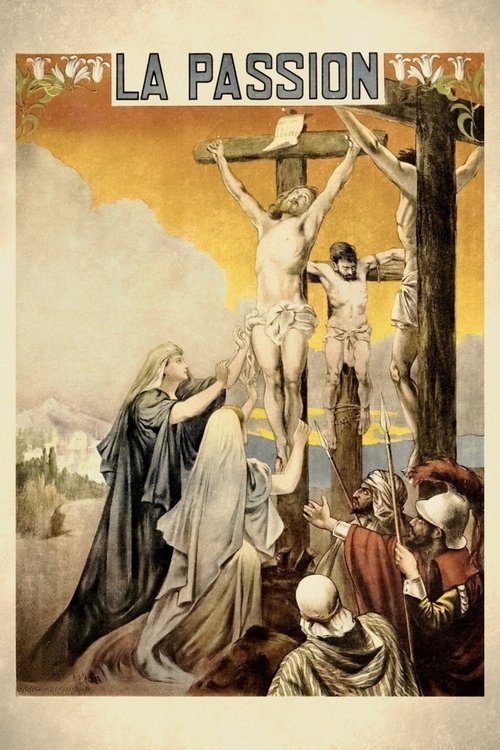
The Life and Passion of Jesus Christ
1903
No user ratings available yet
Representation score: 0.3 out of 10
Representation Score
Minimal
1906
Not RatedDirector
Alice Guy-Blaché
Runtime
33 minutes
Average Rating
No ratings yetNew Showbiz Analysis
The film presents a paradox between its groundbreaking production and its traditional content. While Alice Guy-Blaché’s role as a female director challenges early industry norms, the film’s subject matter remains firmly rooted in orthodoxy. The narrative is constructed around strict religious frameworks that emphasize Christian ideals. This results in a lack of diverse representation, as the story adheres to established historical and cultural norms. Ultimately, the work reinforces traditional Western religious structures without challenging them through varied character perspectives.
Category Breakdown
The film follows a traditional biblical structure. There is no indication of non-straight or non-cisgender identities or same-sex relationships in the story.
Alice Guy-Blaché’s direction stands out as a notable exception for a woman directing in 1906. However, the narrative leans heavily on traditional religious figures and roles.
Set in ancient Judea, the film likely employs Eurocentric casting typical of early 20th-century European films. The cast appears quite uniform.
The film functions as a series of scenes emphasizing Christian morals. It highlights traditional Western religious practices and institutions.
None of the characters are shown making decisions related to disabilities. Physical conditions are probably used symbolically to represent divine intervention rather than realistic portrayal.
Present on Screen
Limited or Absent
Official Synopsis
The stations of Christ's life are segmented into a series of performative tableaux.
1903
2003
1898
1928
1927

2011
1923
1979
No reviews yet. Be the first to share your thoughts on this movie!
Use the rating form above to leave a star rating and optional review.