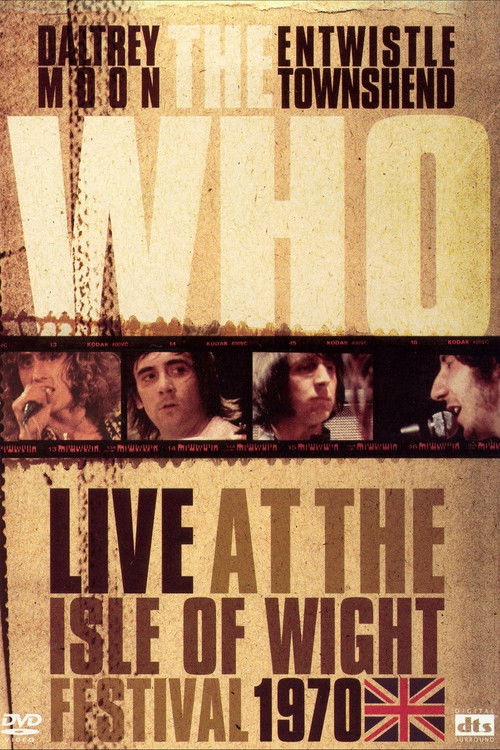
Listening to You: The Who Live at the Isle of Wight
1998
No user ratings available yet
Representation score: 0.5 out of 10

Representation Score
Good
1999
NRDirector
Erez Laufer, Chris Hegedus
Runtime
57 minutes
Average Rating
No ratings yetNew Showbiz Analysis
This documentary functions as a historical archive of a landmark musical performance. Its primary strength lies in its documentation of racial and cultural ability to act during a period of intense social upheaval. While the film excels at showing the disruption of traditional Western hierarchies through Hendrix's artistry, it remains limited by its focus on a singular musical event. It lacks specific, character-driven narratives regarding LGBTQ+ or disability representation. Ultimately, the film is a vital record of progressive social transition, using the Woodstock stage to challenge mid-century social norms and institutional structures.
Category Breakdown
The film captures the 1969 counterculture atmosphere, which relaxed social constraints. However, it lacks explicit depictions of LGBTQ+ identities or specific narratives focused on queer individuals.
The musical focus remains heavily male-dominated, centered on Hendrix and his band. Women appear as active participants in the audience, reflecting a broader cultural shift in gender roles.
Hendrix provides a powerful display of racial ability to act and creative mastery. His deconstruction of national symbols through music serves as a profound critique of systemic structures.
The documentary highlights a rejection of traditional institutions in favor of communal living. It captures a significant moment of anti-establishment sentiment and countercultural expression.
There is no discernible focus on disability representation within the concert footage or the provided documentation.
Present on Screen
Limited or Absent
Official Synopsis
Nine o'clock on Monday morning, August 18, 1969: while the work force was starting the day, Jimi Hendrix was taking the stage at Woodstock. While hundreds of thousands had already left, 25,000 people remained to see this incredible performance. Hendrix, along with drummer Mitch Mitchell and bassist Billy Cox, offered masterly renditions of the songs of the recently disbanded Experience ("Hey Joe," "Foxey Lady"), and gave a preview of the blues-based Band of Gypsys ("Izabella," "Hear My Train A Comin'"), as well as Jimi's era-defining rendition of "The Star Spangled Banner." Though the weekend had witnessed some landmark performances by other great artists, this performance from Hendrix is regarded by many as the defining moment in a festival ripe with defining moments.
1998
1978
1977
2019
2004
2005
2005
2011
No reviews yet. Be the first to share your thoughts on this movie!
Use the rating form above to leave a star rating and optional review.