
The Other Side of the Mirror: Bob Dylan: Live at the Newport Folk Festival
2007
No user ratings available yet
Diversity score: 2.4 out of 10
1998
Director
Murray Lerner
Runtime
85 minutes
Average Rating
No ratings yetSynopsis
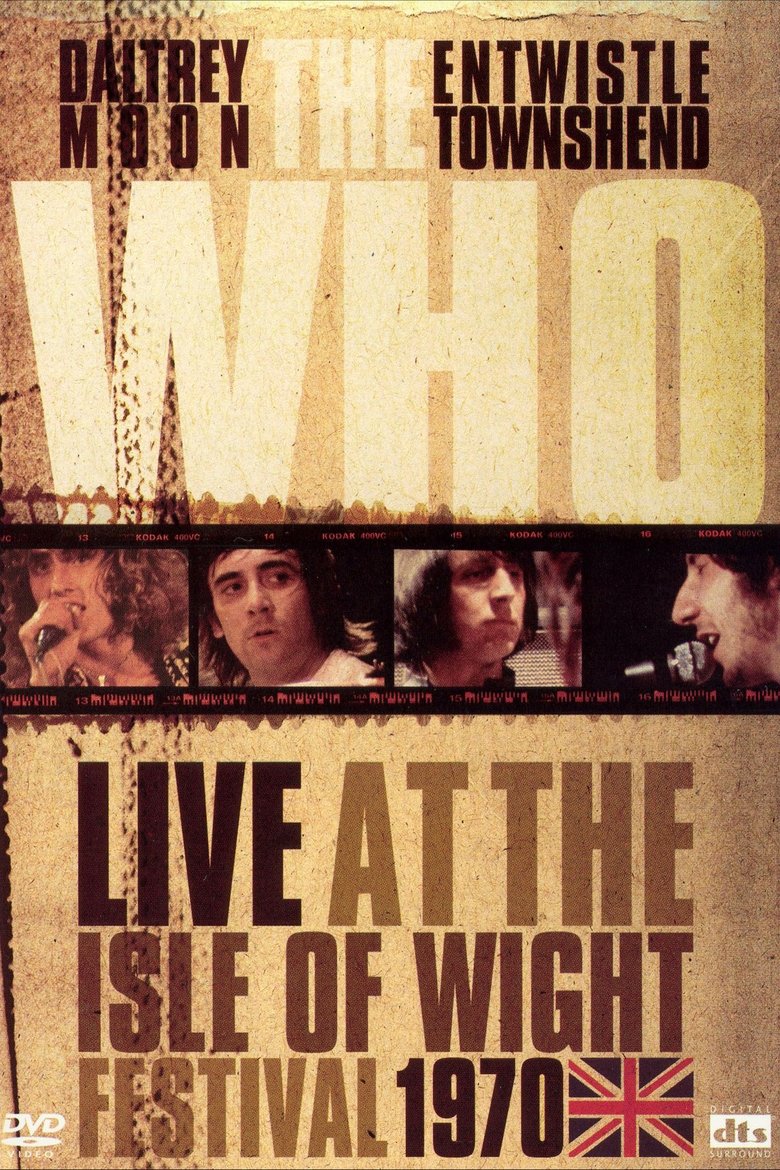
Mod rockers the Who are captured live by director Murray Lerner at the legendary Isle of Wight festival in 1970, attended by 600,000 people. All the old classics are included in a typically energetic set; Moon the Loon, Roger the Dodger and Pete... the guitarist. And John Entwistle on bass. This is the first DVD release, without the extra material found on the DVD/Blu-ray re-release of 2006.
Overall Score
Minimal
Category Breakdown
LGBTQ+ Representation
The film lacks any evidence of LGBTQ+ characters or non-cisnormative identities. As a concert documentary, it focuses on musical performance rather than queer thematic exploration.
Gender Representation
The production centers on a traditionally masculine-coded rock performance. Creative agency is held by the male members of The Who, reinforcing a male-dominated musical landscape typical of the 1970s.
Racial & Ethnic Diversity
The film reflects the demographic composition of the 1970s British rock scene. It features a homogeneous group without evidence of a non-white majority cast or intentional diverse casting.
Religious & Cultural Diversity
The content serves as a celebration of Western rock music and festival subculture. It does not deconstruct traditional social structures or prioritize secularism over religious themes.
Disability Representation
There is no documented evidence of performers or characters with visible or invisible disabilities. The film does not engage with neurodivergence or physical disability.
Strengths
Areas for Improvement
AI Analysis
This documentary functions as a historical preservation of a specific musical moment rather than a narrative designed to engage with social identity. It captures The Who's energetic set at the 1970 Isle of Wight festival, focusing entirely on the rock ensemble's performance. The film's architecture reflects the social hierarchies and demographic constraints of the early 1970s British rock scene. Because the work lacks intentionality regarding intersectional representation or the subversion of cultural norms, it remains a narrow cultural snapshot. Ultimately, the film prioritizes the preservation of rock history over progressive social commentary or the exploration of systemic power dynamics.
2007
1996
1998
1991
2022
1992
2005
1995
2002
2015

2008
2007
No reviews yet. Be the first to share your thoughts on this movie!
Use the rating form above to leave a star rating and optional review.