The Great Carrot-Train Robbery
1969
No user ratings available yet
Representation score: 0.4 out of 10
Representation Score
Minimal
1926
Director
Walt Disney
Runtime
7 minutes
Average Rating
No ratings yetNew Showbiz Analysis
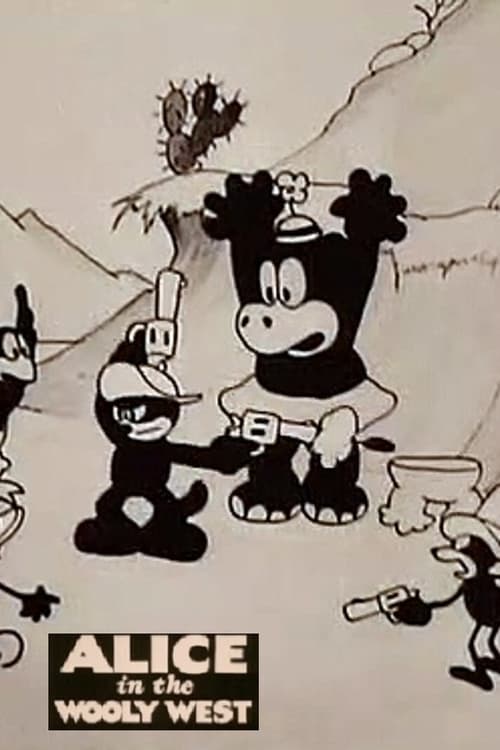
Alice in the Wooly West is a product of early studio animation that relies heavily on established genre clichés. The narrative structure prioritizes traditional heroism and gendered vulnerability, offering very little disruption to the social hierarchies of the early 20th century. The film adheres to the standard Western clichés of its time, focusing on a male protagonist's physical prowess and a female character's need for protection. This results in a narrow representation that lacks racial, cultural, or LGBTQ+ depth. Ultimately, the work serves as a conventional slapstick comedy. It reinforces mid-century ideals of individual merit and frontier justice rather than exploring diverse perspectives or complex social identities.
Category Breakdown
The film adheres to traditional patterns typical of the 1920s, showing no representation of LGBTQ+ identities or non-assuming gender matches what was assigned at birth gender expressions.
Alice is portrayed in the traditional damsel in distress role, being captured and needing rescue. The plot is driven by male characters, leaving Alice as a passive recipient.
The film lacks any indication of a diverse cast or non-white characters, reflecting the homogeneous casting standards common to the Western genre of its era.
The story functions as a standard morality play centered on frontier justice and individual heroism, reinforcing traditional American ideals without offering critical perspectives.
There is no information regarding the depiction of physical or neurodivergent disabilities. No characters are portrayed with visible or invisible disabilities in the provided context.
Present on Screen
Limited or Absent
Official Synopsis
Julius is out for a ride on his horse; he does some rope tricks. Some bad guys rob a stagecoach; one of the passengers is Alice, who finds herself stuck between the head bad guy and a cactus. Julius rides in and saves most of the passengers, but the bad guy rides off with Alice. After a short chase, he ends up battling Julius on top of a tall rock outcropping. A piece eventually breaks off, sending both of them into a boulder field. They play hide-and-seek a while. Julius then takes off his fur and sends it out as a decoy while he sneaks up behind the bad guy with a club and beats him into the ground. Alice comes up to thank him; ashamed by his nakedness, he hides behind a rock and puts his fur back on, then accepts her thanks.
1969
1939
1925
1924
1925

1926

1928
1925
No reviews yet. Be the first to share your thoughts on this movie!
Use the rating form above to leave a star rating and optional review.