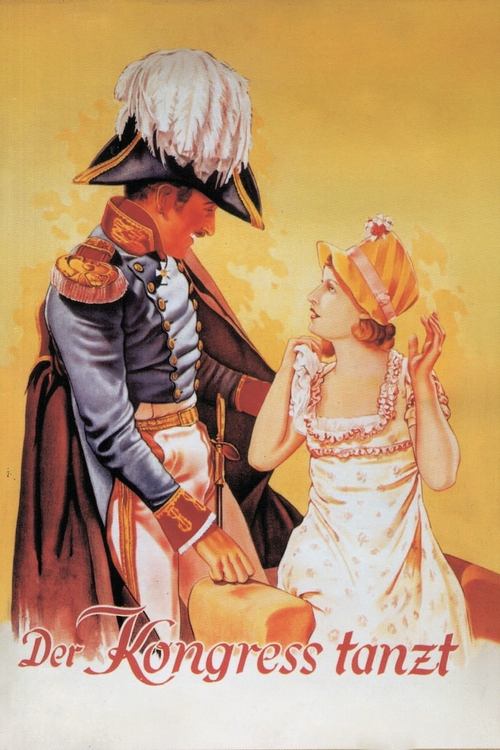
Congress Dances
1931
No user ratings available yet
Representation score: 0.4 out of 10
Representation Score
Minimal
1950
Director
Paul May
Runtime
100 minutes
Average Rating
No ratings yetNew Showbiz Analysis
Paul May’s historical comedy adheres to the conventional storytelling and genre expectations of post-war German cinema. The film relies on a classic identity-swap cliché to drive its comedic and romantic elements. It reinforces established social and gender hierarchies rather than challenging them. The narrative focuses on class-based situational irony and romantic intrigue within a stable social order.
Category Breakdown
The story follows a traditional romantic relationship between a King and a Countess, without any representation of LGBTQ+ identities or perspectives.
The plot centers around a male protagonist who holds a position of power, while the female lead is primarily defined by her romantic role within the story.
Set in a historical European context, the film reflects a homogeneous demographic typical of 1950s German cinema, without any multi-layered racial dynamics.
The film explores class distinctions through a monarchical identity swap, operating within traditional social hierarchies without critiquing Western institutional structures.
There are no characters with visible or invisible disabilities mentioned in the synopsis.
Present on Screen
Limited or Absent
Official Synopsis
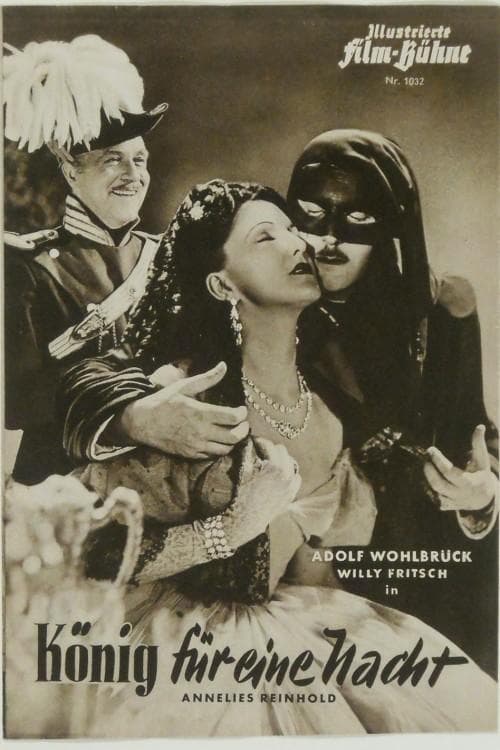
Count Lerchenbach, the King's Adjutant, changes places with his master, King Ludwig I, in a romantic assignation with the beautiful Countess Rosenau.
1931

1955
1966
1971
1940

1969
1995
1959
No reviews yet. Be the first to share your thoughts on this movie!
Use the rating form above to leave a star rating and optional review.