The Kaiser's Lackey
1951
No user ratings available yet
Diversity score: 4.2 out of 10
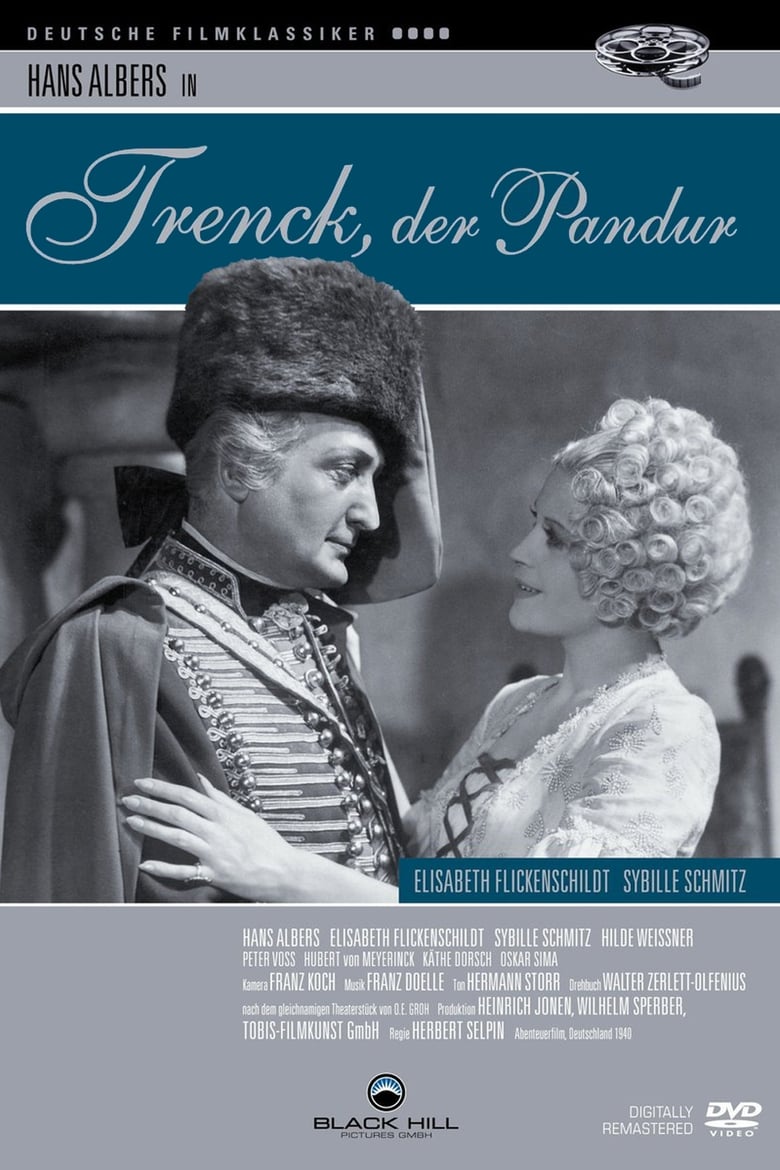
1940
Director
Herbert Selpin
Runtime
96 minutes
Average Rating
No ratings yetSynopsis
Film about the fictitious adventures of Franz Freiherr von Trenck, who lived during the times of empress Maria Theresia of Austria garnished with espionage and twisted love affairs.
Overall Score
Limited
Category Breakdown
LGBTQ+ Representation
The film adheres to strict heteronormative structures. Romantic elements are limited to traditional 18th-century courtship and heterosexual dynamics.
Gender Representation
Female characters primarily serve as romantic interests or figures needing protection. The narrative reinforces traditional hierarchies rather than granting women independent agency.
Racial & Ethnic Diversity
The cast is predominantly white and European, reflecting the film's 1940 German production context. It presents a homogeneous demographic without diverse casting.
Religious & Cultural Diversity
The story explores defiance of military and political structures through a rogue-like hero. However, it remains centered on traditional concepts of personal honor.
Disability Representation
There is no discernible focus on visible or invisible disabilities. No characters are utilized as plot devices related to physical or mental health.
Strengths
Areas for Improvement
AI Analysis
Trenck, der Pandur is a conventional historical drama that prioritizes individualistic heroism over intersectional representation. The film operates within the social constraints of its 1940 production era and its 18th-century setting. While the protagonist offers a sense of empowerment by defying institutional authority, this defiance is rooted in classical notions of honor. The film lacks modern systemic critique or diverse demographic representation. Ultimately, the production relies on traditional storytelling tropes, resulting in a narrative that is demographically homogeneous and socially conservative.
No reviews yet. Be the first to share your thoughts on this movie!
Use the rating form above to leave a star rating and optional review.