Concrete Night
2013
No user ratings available yet
Diversity score: 6.2 out of 10
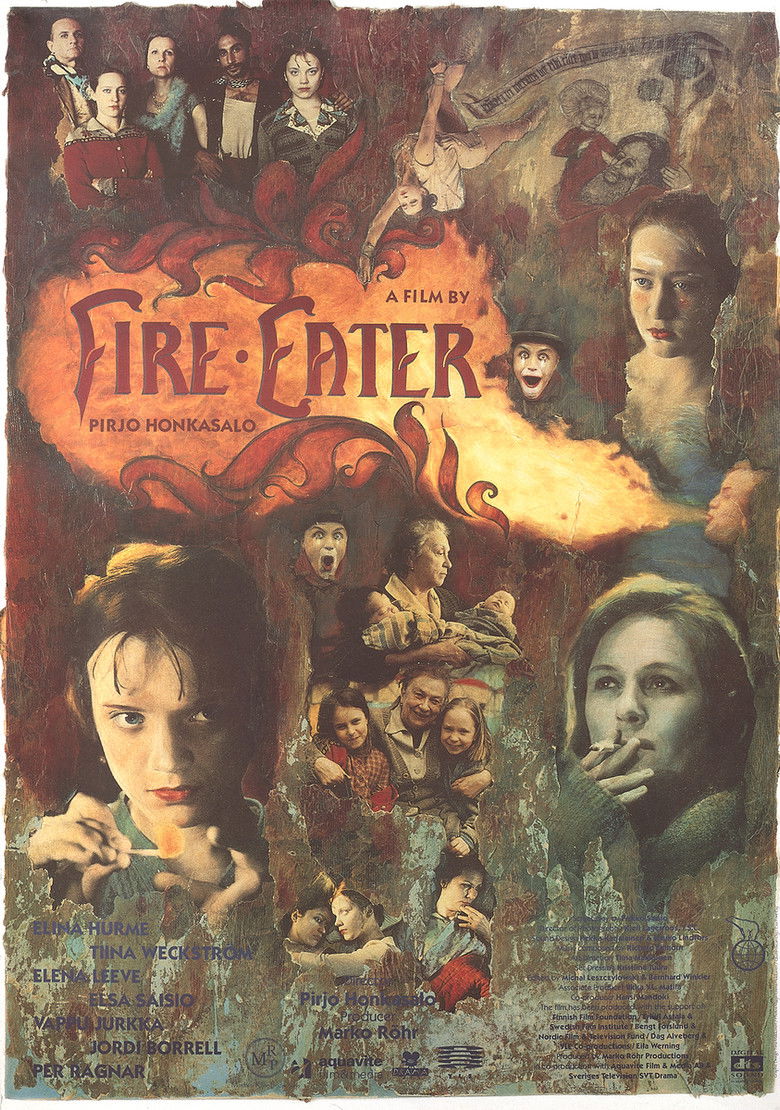
1998
Director
Pirjo Honkasalo
Runtime
104 minutes
Average Rating
No ratings yetSynopsis
The twin sisters Helena and Irene are born in Helsinki during World War II. A few months later their mother, Sirkka, leaves the girls in the care of their grandmother, an old communist, and runs away with a German soldier. Their life under the protection of their grandmother and the teachings of communism ends first with the death of Stalin, then with that of their grandmother. The girls are eight years old when they are put in an orphanage. Their mother shows up at the orphanage in the company of Ramon, a Spanish trapeze artist. They are on a talent search for a German circus. Ramon trains the reluctant Irene during circus tours in Central Europe. She becomes the trapeze star of the circus. The hard work soon exhausts Irene and she falls from height, as if on purpose. Helena has secretly learned the art of fire-eating. Now she is burdened with both her mother and her sister. The violent life, however, separates the three from each other. In the present-day Helsinki the middle-aged...
Overall Score
Fair
Category Breakdown
LGBTQ+ Representation
The film focuses on fractured maternal and sororal bonds rather than explicit queer identities. While it explores unconventional family structures and fluid identities within a nomadic circus, there is no documented depiction of same-sex intimacy.
Gender Representation
The narrative centers on female agency and physical endurance. Protagonists Helena and Irene navigate high-stakes survival through their own mastery, while the mother, Sirkka, is depicted through a lens of autonomy rather than domesticity.
Racial & Ethnic Diversity
The setting moves from Helsinki through Central Europe, introducing a Spanish character, Ramon. This circus environment creates a cosmopolitan, cross-cultural intersection that breaks the homogeneity of the Finnish setting.
Religious & Cultural Diversity
The story engages deeply with communist ideologies and the deconstruction of the traditional family unit. It critiques bourgeois stability by favoring a nomadic, anti-institutional lifestyle centered around the circus.
Disability Representation
Physical vulnerability is explored through Irene’s traumatic fall from the trapeze. However, these moments serve as narrative catalysts for psychological shifts rather than an exploration of lived experience with disability.
Strengths
Areas for Improvement
AI Analysis
Fire-Eater is a character-driven drama that prioritizes the psychological and physical endurance of its female protagonists. It succeeds in disrupting traditional gender hierarchies by focusing on women's autonomy and their mastery of dangerous circus arts. The film's strength lies in its sophisticated engagement with political ideologies and its rejection of conventional domesticity. By utilizing a nomadic circus setting, the narrative introduces international elements and cross-cultural dynamics that move beyond a strictly Finnish perspective. However, the film lacks explicit representation of LGBTQ+ identities and does not explore disability as a lived experience. While it touches on bodily trauma, these elements remain tools for plot progression rather than deep dives into specific marginalized identities.
2013

2011
2017
2016

2012
2019
1982

1998
2009

2004
1990
2009
No reviews yet. Be the first to share your thoughts on this movie!
Use the rating form above to leave a star rating and optional review.