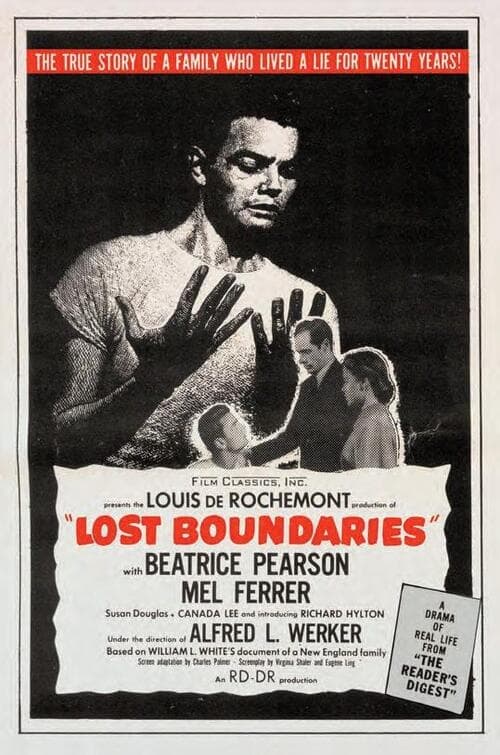
Lost Boundaries
1949
No user ratings available yet
Representation score: 3.5 out of 10

Representation Score
Limited
1999
RDirector
Jay Craven
Runtime
112 minutes
Average Rating
No ratings yetNew Showbiz Analysis
A Stranger in the Kingdom excels as a focused exploration of racial integration and the disruption of mid-century social structures. By placing a Black man in a position of spiritual leadership, the film effectively exposes systemic biases and challenges the homogeneity of rural Vermont. However, the film's impact is limited by its narrow thematic scope. It operates within traditional 1950s social frameworks, showing little evidence of gender subversion or diverse representation beyond the central racial conflict. Ultimately, while the film offers a sophisticated critique of racial hierarchies, it lacks representation for LGBTQ+ identities, disability, and high-profile female characters.
Category Breakdown
The film does not include any LGBTQ+ characters or stories about non-straight identities. It does not address these themes.
The story focuses on the social and racial tensions experienced by the male protagonist. There are few high-profile female characters or challenges to 1950s gender roles.
The story centers on a Black man serving as a spiritual leader in 1950s Vermont. This places him in a position that challenges the era's racial hierarchies and highlights the community's homogeneity.
The film examines the tension between established religious norms and the arrival of an outsider. It critiques institutional rigidity through the friction between the town and the new minister.
There is no specific information about the depiction of physical, sensory, or neurodivergent characters within the work.
Present on Screen
Limited or Absent
Official Synopsis
A Vermont town in the 1950s hires a new minister based on his war record, but are shocked, when he shows up, to find that he is black.
1949

1962

2005
1997
2009

1990

1986

1984
No reviews yet. Be the first to share your thoughts on this movie!
Use the rating form above to leave a star rating and optional review.