
Pinky
1949
No user ratings available yet
Representation score: 4.1 out of 10
Representation Score
Limited
1949
Not RatedDirector
Alfred L. Werker
Runtime
99 minutes
Average Rating
No ratings yetNew Showbiz Analysis
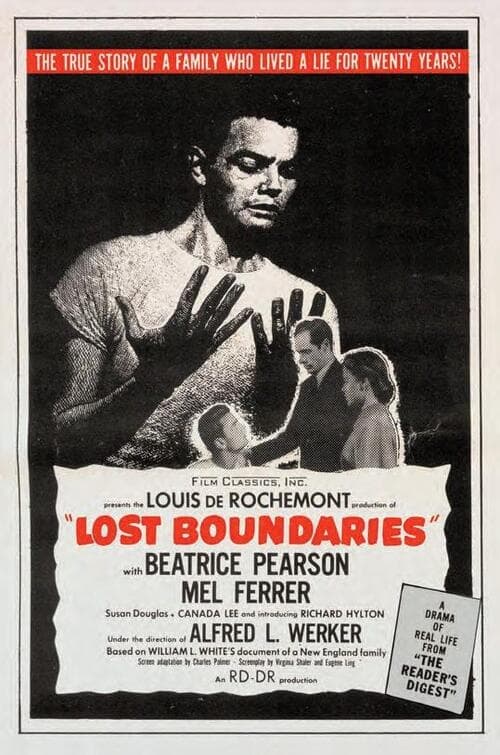
Lost Boundaries stands out as a progressive film for its time, primarily due to its examination of racial identity. By focusing on a family navigating the complexities of 'passing,' the film challenges the societal prejudices and arbitrary racial boundaries of the era. However, the film adheres to traditional gender roles and a straight-centered structure, limiting its scope regarding gender and LGBTQ+ representation. Ultimately, the film's impact lies in its ability to deconstruct racial hierarchies and expose the fragility of social cohesion, even while staying within the conventional domestic archetypes of the time.
Category Breakdown
The film does not include any LGBTQ+ characters or explore themes of queer intimacy. The story stays within a mid-20th-century framework that assumes everyone is straight.
The story follows a traditional nuclear family structure where the female lead supports the household. She shows emotional strength, but the narrative focuses on the male protagonist.
The film explores the concept of racial boundaries by focusing on a light-skinned African-American family passing as white. This approach critiques the arbitrary nature of racial distinctions and social hypocrisy.
The narrative critiques the social hierarchies and perceived moral superiority of established institutions in a small town. It highlights the tension between individual beliefs and communal norms.
There are no prominent depictions of physical or neurodivergent disabilities among the main characters.
Present on Screen
Limited or Absent
Official Synopsis
A light-skinned African-American family are "passing" in an all-white New England town. When the truth comes out, the more prejudiced neighbors demand their expulsion from the community.
1949
1950

1960
1962
1964
1965
1964
1960
No reviews yet. Be the first to share your thoughts on this movie!
Use the rating form above to leave a star rating and optional review.