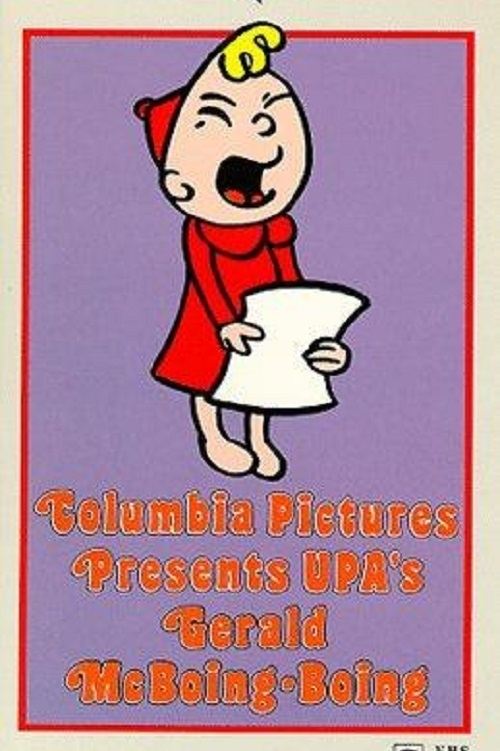
How Now Boing Boing
1954
No user ratings available yet
Diversity score: 3.8 out of 10

1950
ApprovedDirector
Robert Cannon, John Hubley
Runtime
8 minutes
Average Rating
No ratings yetSynopsis
The story of a little boy who would only talk in sound effects. With story by Dr. Seuss (and Bill Scott of Rocky and Bullwinkle fame) this cartoon won the Oscar for best short subject (animated) for 1950.
Overall Score
Fair
Category Breakdown
LGBTQ+ Representation
The film contains no LGBTQ+ characters or themes. The story focuses entirely on the protagonist's unique communication style within a conventional domestic setting.
Gender Representation
Gender roles follow the traditional 1950s nuclear family model. Parental figures operate within established archetypes without subverting or disrupting standard masculine or feminine hierarchies.
Racial & Ethnic Diversity
The minimalist, abstract animation style lacks specific racial or ethnic markers. This design choice results in a lack of intentional intersectional representation or diverse ethnic identities.
Religious & Cultural Diversity
The film explores the outsider experience through a critique of social conformity. It centers on the tension between individual eccentricity and the pressure to adhere to collective norms.
Disability Representation
Gerald’s sound-effect communication serves as a metaphor for neurodivergence. The film treats his unique identity with agency rather than as a deficit requiring a cure.
Strengths
Areas for Improvement
AI Analysis
Gerald McBoing-Boing is a modernist masterpiece that uses a minimalist aesthetic to explore the friction between individuality and societal expectations. While it lacks modern intersectional markers, its humanist core provides a progressive foundation for its era. The film's greatest strength lies in its empathetic portrayal of a neurodivergent-coded protagonist. Rather than treating his difference as a problem to be solved, the narrative validates his unique way of being. However, the work is deeply rooted in the social constraints of 1950. It maintains a homogeneous domestic environment that lacks racial, ethnic, or LGBTQ+ diversity, reflecting the era's standard social structures.
1954
1960
1952
1954
1945
1956
1959
1948
1954
1942
1945
1955
No reviews yet. Be the first to share your thoughts on this movie!
Use the rating form above to leave a star rating and optional review.