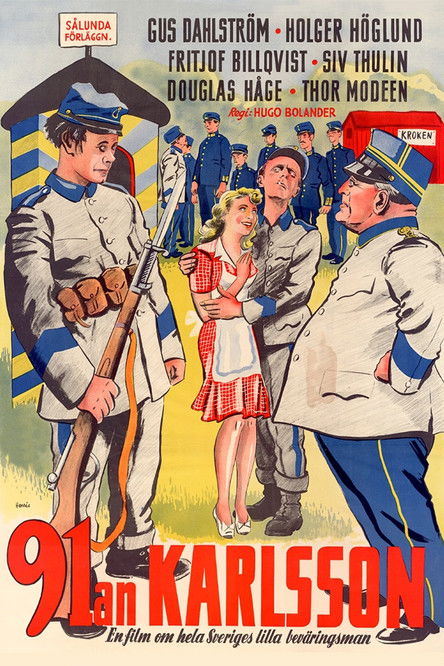
Private Number 91-Karlsson
1946
No user ratings available yet
Representation score: 1.3 out of 10
Representation Score
Minimal
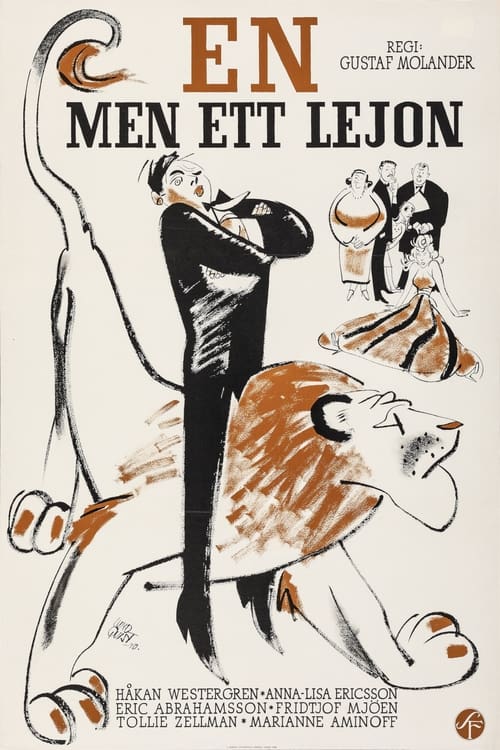
1940
SDirector
Gustaf Molander
Runtime
94 minutes
Average Rating
No ratings yetNew Showbiz Analysis
One, But a Lion! is a traditional period comedy that mirrors the demographic homogeneity of early 20th-century Swedish cinema. It centers on character-driven narratives within the social constraints of its era. The film excels in exploring women's ability to drive the story and emotional complexity. However, it remains bound to the traditional hierarchies and demographic norms of the time. Overall, the work does not delve into the systemic deconstruction of identity or power dynamics, reflecting its historical and social context.
Category Breakdown
The film does not include any characters with LGBTQ+ identities. The romantic relationships follow traditional social structures of 19th-century Sweden.
The story focuses on a female protagonist's emotional journey and social challenges. It provides a detailed look at how women navigate a rigid social hierarchy.
The cast is made up of actors who reflect the demographics of 19th-century Sweden. There are no non-white characters or attempts at color-blind casting.
This period piece examines class distinctions and social norms. It adheres to the social frameworks of the time without challenging Western or capitalist ideologies.
There are no characters with visible or invisible disabilities featured in the narrative or used as central plot points.
Present on Screen
Limited or Absent
Official Synopsis
The fashion house boss Harry Martin has invited all his staff to a crayfish party at his home.
1946
1991
1943

2014
1946
1950
1953
1940
No reviews yet. Be the first to share your thoughts on this movie!
Use the rating form above to leave a star rating and optional review.