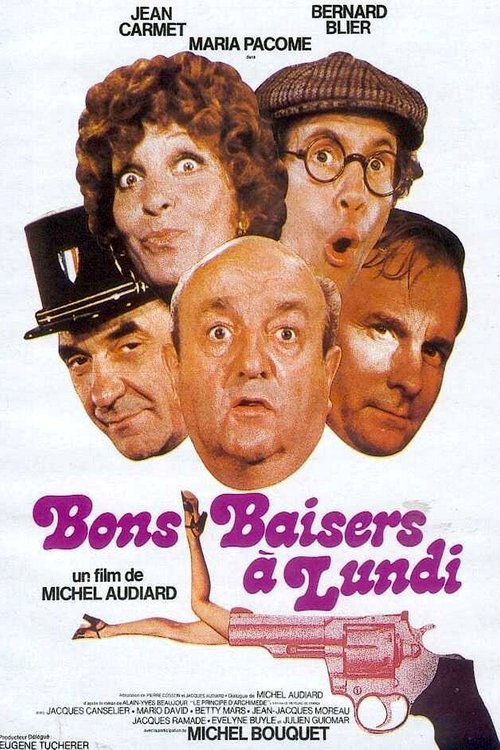
Kisses Till Monday
1974
No user ratings available yet
Representation score: 4.3 out of 10

Representation Score
Minimal
1959
Director
Jean Boyer
Runtime
85 minutes
Average Rating
No ratings yetNew Showbiz Analysis
Jean Boyer’s comedy follows a conventional mid-century structure that prioritizes situational humor over social critique. The plot centers on a veterinarian and a new doctor whose professional disruption is resolved through a traditional marriage. This trajectory reinforces established social hierarchies rather than challenging them. The film relies on established clichés, such as the outsider disrupting a settled community. While it features a female professional, the narrative ultimately steers toward domesticity and the nuclear family unit, maintaining the status quo of the era.
Category Breakdown
The film focuses solely on the transition from celibacy to marriage and does not include any representation of LGBTQ+ identities or critiques of traditional romantic structures.
A female doctor is introduced as a professional but mainly serves as a catalyst for plot complications. Her character arc ends with her integrating into a traditional marital role.
Set in an Italian village, the film reflects the demographic homogeneity common in 1950s European comedies. There is no evidence of multi-ethnic casting or diverse ethnic representation.
The narrative emphasizes community cohesion and the restoration of local order. It reinforces traditional Western family values by presenting marriage as a solution to social isolation.
Characters described as bedridden or imaginary patients serve as comedic plot devices. The film lacks meaningful exploration of ability to act or neurodivergence in these roles.
Present on Screen
Limited or Absent
Official Synopsis
A veterinarian in Figarolo, Giuliano Goberti has also been providing care to the villagers since the death of Dr. Lofal, but the arrival of a luscious replacement for the vacant doctor precipitates events. While she prescribes drugs, Giuliano orders the bedridden Countess to eat well and exercise. A Roman journalist reports on the miraculous results. Soon the quiet little Italian town is invaded by a motley crew of imaginary patients, who have to bring an animal with them to save the vet from trouble for practicing medicine illegally. In the end, the brave Giuliano marries the lovely doctoress, thus curing their celibacy.
1974
1979
1963

1965
1965

1974
1973
1988
No reviews yet. Be the first to share your thoughts on this movie!
Use the rating form above to leave a star rating and optional review.