The Suspect
1945
No user ratings available yet
Representation score: 1.8 out of 10
Representation Score
Minimal
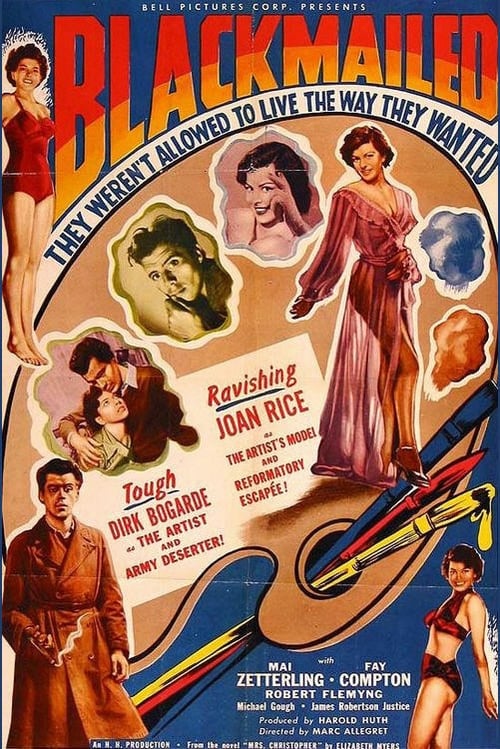
1951
ApprovedDirector
Marc Allégret
Runtime
85 minutes
Average Rating
No ratings yetNew Showbiz Analysis
Blackmailed is a conventional crime drama that upholds the social and demographic norms of post-war France. It functions as a psychological thriller centered on deception and reputation, rather than exploring diverse identities. The film relies on traditional narrative structures and mid-century social norms. It lacks multi-layered representation, focusing instead on the personal consequences of criminal actions within a homogeneous setting. Ultimately, the work serves as a period piece that reflects the era's limited perspective on gender, race, and identity, offering little disruption to the prevailing social order.
Category Breakdown
The film does not include any LGBTQ+ characters or queer subtext. The interpersonal dynamics stay within the traditional heterosexual norms of the early 1950s.
The story follows the gender norms of the mid-20th century. Though there is a powerful female antagonist who challenges the male protagonist, the film does not break away from traditional patriarchal structures.
The cast and setting are predominantly white, reflecting the demographic norms of 1950s France. There is no significant evidence of non-white actors or racial diversity.
The narrative operates within a typical middle-class European context. It focuses on individual morality and social standing without critiquing systemic issues or deconstructing culture.
There is no representation of physical, sensory, or neurodivergent disabilities. No such identities are present within the main character arcs or the supporting cast.
Present on Screen
Limited or Absent
Official Synopsis
A blackmailer is murdered, and those who witnessed the scene agree to keep quiet; the complication is that the scene is also witnessed by a young artist, a victim of blackmail as well. (BFI Website)
1945

1958
1956
1955
1939
1950
1950
1940
No reviews yet. Be the first to share your thoughts on this movie!
Use the rating form above to leave a star rating and optional review.