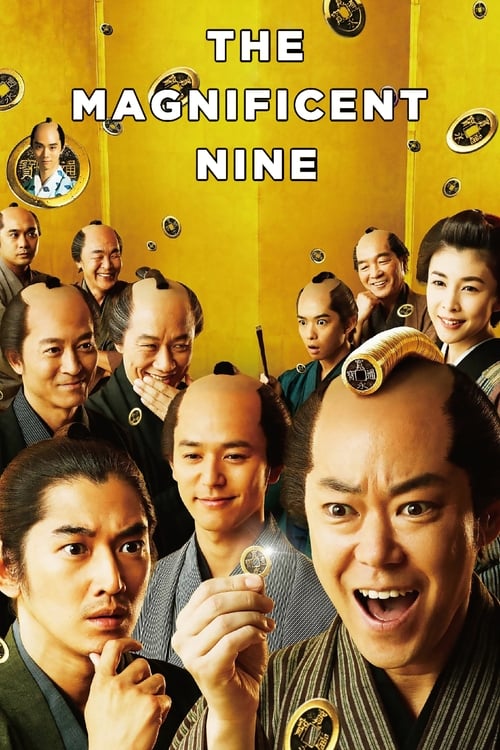
The Magnificent Nine
2016
No user ratings available yet
Diversity score: 5.0 out of 10

1957
Not RatedDirector
Yūzō Kawashima
Runtime
110 minutes
Average Rating
No ratings yetSynopsis
Saheji, a man-about-town, gets stuck at a high-class brothel when he can’t pay the bill. He makes the best of his situation by performing various tasks amidst the tumult of the end of the shogunate—but always by making sure to get a “commission” for his troubles.
Overall Score
Fair
Category Breakdown
LGBTQ+ Representation
The film lacks explicit evidence of LGBTQ+ characters or non-heteronormative identities. The brothel setting suggests a focus on traditional gendered spaces and transactional intimacy.
Gender Representation
While the setting involves women with economic agency, the plot centers on a male protagonist using wit to navigate female-dominated spaces. This follows traditional comedic tropes rather than subverting hierarchies.
Racial & Ethnic Diversity
The cast is ethnically homogeneous, reflecting the historical Japanese context of the Bakumatsu era. It explores the collision of traditional structures with encroaching Western cultural influences.
Religious & Cultural Diversity
The narrative disrupts social hierarchies by centering a protagonist who thrives on the fringes of legality. It uses the decay of the Shogunate to frame individualistic, opportunistic agency.
Disability Representation
There is no mention of characters with visible or invisible disabilities within the narrative.
Strengths
Areas for Improvement
AI Analysis
The film serves as a period comedy that leverages the political instability of the Bakumatsu era to explore social fluidity. It succeeds in deconstructing historical stability by focusing on a protagonist who thrives amidst systemic dysfunction and moral ambiguity. However, the representation remains largely traditional. The narrative relies on established gendered tropes and lacks explicit engagement with queer identities or diverse physical abilities. Ultimately, the work is a study of individual agency during institutional decay rather than a modern exploration of intersectional identity.
2016

1984
1975

2014

2015
2014
2013

2018
1957
1987
2017

1981
No reviews yet. Be the first to share your thoughts on this movie!
Use the rating form above to leave a star rating and optional review.