Public Opinion
1935
No user ratings available yet
Representation score: 1.1 out of 10
Representation Score
Minimal
1934
ApprovedDirector
Ralph Murphy
Runtime
74 minutes
Average Rating
No ratings yetNew Showbiz Analysis
The film functions as a standard period drama centered on individual psychological conflict. It prioritizes domestic tension and professional jealousy over systemic social critique or identity-based storytelling. Due to the historical context of 1934, the production likely adheres to strict social norms. The narrative structure appears built around traditional interpersonal conflicts rather than progressive representation. Overall, the film lacks multi-layered elements, reflecting the limited narrative scope and historical constraints of early studio-era cinema.
Category Breakdown
The film does not include any characters with LGBTQ+ identities or same-sex relationships, reinforcing the assumption that everyone is straight or cisgender. The story likely upholds traditional heterosexual family structures.
The plot centers on a wife's career success, which may challenge traditional gender roles by giving her professional ability to act. However, it is unclear whether the story ultimately restores traditional gender dynamics.
The film does not feature any multi-layered casting or disruption of racial hierarchies. It likely includes the homogeneous, Anglo-centric casts typical of this genre and period.
The story follows conventional Western dramatic clichés, focusing on individual jealousy and marital stability rather than critiquing Western institutions or religious morality.
No characters with visible or invisible disabilities are included in the narrative.
Present on Screen
Limited or Absent
Official Synopsis
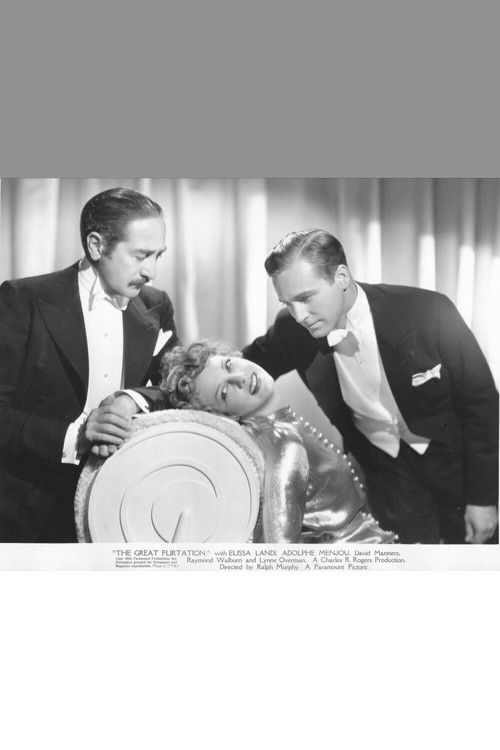
Egotistical Budapest stage actor Stephan Karpath (Adolphe Menjou) has his lover and co-star Zita Marishka (Elissa Landi) fired out of jealousy. They marry on a ship to New York City after she decides to leave. In America, Stephan struggles to find work while Zita disguises herself as a famous unmarried Russian actress to land a leading Broadway role, eventually securing a part for Stephan opposite her. As Zita draws romantic attention from the producer and playwright Larry Kenyon (David Manners), Stephan eventually steps aside, feigning a return to Budapest.
1935

1930
1928
1937
1932

1936
1936
1933
No reviews yet. Be the first to share your thoughts on this movie!
Use the rating form above to leave a star rating and optional review.