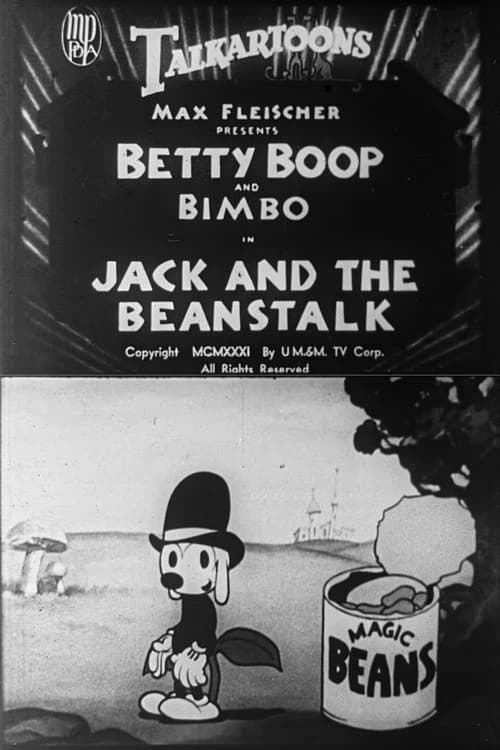
Jack and the Beanstalk
1931
No user ratings available yet
Representation score: 0.4 out of 10
Representation Score
Minimal
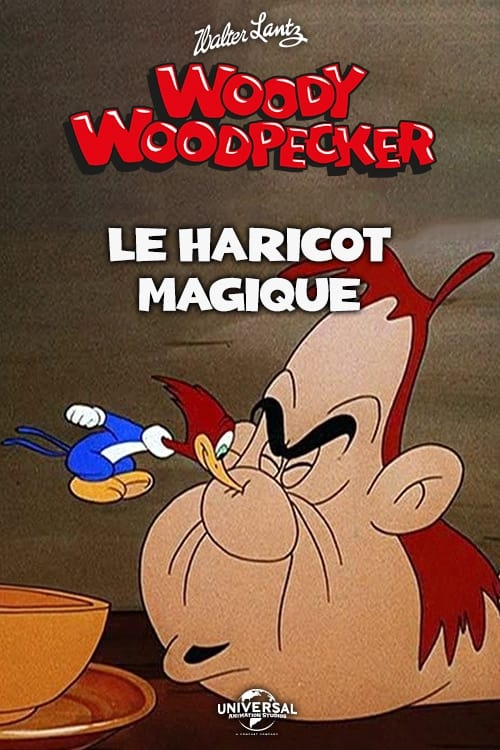
1947
ApprovedDirector
Dick Lundy
Runtime
7 minutes
Average Rating
No ratings yetNew Showbiz Analysis
Woody the Giant Killer is a product of its 1947 historical context, relying heavily on established clichés and traditional storytelling methods. The narrative focuses on a straightforward progression of success through wit and resourcefulness, avoiding complex multi-layered themes. The film reinforces existing social hierarchies rather than challenging them. From the protagonist's pursuit of housing to the giant's eventual relegation to a service role, the power structures remain conventional and rigid. Ultimately, the animation prioritizes physical comedy and clear-cut character types. This results in a work that avoids social interrogation in favor of a straightforward, Western-centric fairy-tale structure.
Category Breakdown
The film does not include any visible LGBTQ+ characters or non-cisgender identities. It follows a traditional framework that assumes everyone is straight and cisgender.
The story emphasizes traditional gender roles by focusing on a male protagonist's influence. Power dynamics are centered around a male-dominated hierarchy of control and leadership.
The characters and settings in the film are uniform and typical of the era's animation style. The setting is Western and Eurocentric without specifying any particular ethnicity.
The plot revolves around capitalist goals and the acquisition of property. It operates within a traditional Western moral framework and social order.
There is no meaningful portrayal of disabilities or neurodiversity. Characters are defined by their physical abilities, using size and strength rather than exploring differences in depth.
Present on Screen
Limited or Absent
Official Synopsis
Out of work, Woody complains about his not having any living quarters. A slick talking con man convinces him to buy some "magic beans" promising they will guarantee him a home. Sure enough, Woody climbs the resulting beanstalk and finds a huge castle at the top. Unfortunately, the castle is already occupied by a sleeping giant who Woody eventually outwits, turning his castle into a series of apartments with the giant as a bellboy and Woody as his manager.
1931
1933
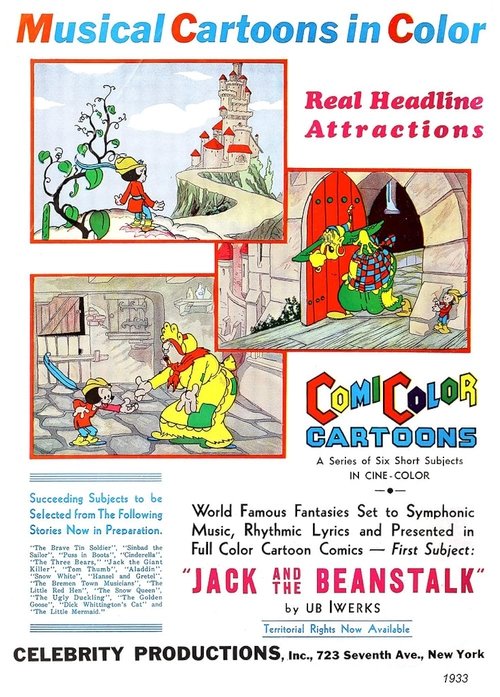
1933
1978
1942
1939
1945
1956
No reviews yet. Be the first to share your thoughts on this movie!
Use the rating form above to leave a star rating and optional review.