Marianne and Juliane
1981
No user ratings available yet
Representation score: 7.0 out of 10
Representation Score
Fair
1978
Director
Margarethe von Trotta
Runtime
88 minutes
Average Rating
No ratings yetNew Showbiz Analysis
Margarethe von Trotta’s film is a sophisticated study of women's ability to drive the story and political radicalization. It excels in gender representation by centering a woman who challenges patriarchal expectations through militant activism. The film also provides a deep critique of Western capitalist and religious institutions. However, the work is limited by its specific historical focus. The demographic is largely homogeneous, resulting in low racial and ethnic diversity. Additionally, while female bonds are central, the film does not explicitly label or center queer identities. Ultimately, the film is a powerful piece of New German Cinema that prioritizes ideological and gender-based subversion over broad demographic inclusivity.
Category Breakdown
The film highlights the strong bond between Christa and Ingrid but does not explicitly center queer romance or non-cisgender identities, leaving room for ambiguity.
Christa rejects traditional domesticity and instead embraces militant political engagement, challenging the status quo. The narrative portrays female strength through disruptive, anti-social roles that defy state control.
The cast is predominantly homogeneous, reflecting the socio-political landscape of late 1970s West Germany. There is no significant racial diversity or non-white casting in this context.
The story offers a sharp critique of capitalism and religion, presenting institutions like the Church and State as obstacles to justice. It portrays radical political conviction as a form of liberation from Western frameworks.
There are no prominent depictions of physical or neurodivergent disabilities that serve as central narrative drivers in this work.
Present on Screen
Limited or Absent
Official Synopsis
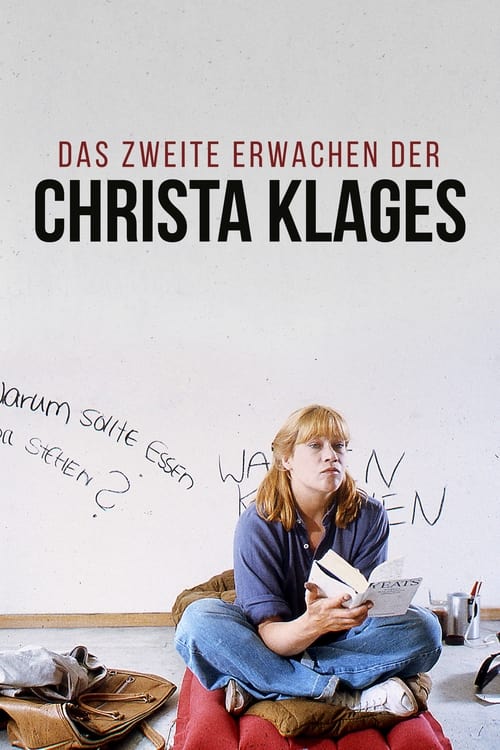
Three people rob a bank to help a day care center that's in debt. Wolf is captured, Werner identified, police suspect Christa is the third. She and Werner ask Hans, a clergyman, to launder the money and give it to the kindergarten. He refuses. They try Ingrid, Christa's friend, who tries to help, but the school rejects the money. When tragedy strikes Werner, Hans helps Christa bolt to a collective in Portugal. Ingrid visits her; their relationship makes the collective nervous, so she returns to Germany and ceases living in hiding. The police are still looking for her and so is a witness to the robbery, Lena, a bank clerk. Lena's interest brings Christa's second awakening.
1981

1975
1973
1970

1994

2011
1992
1979
No reviews yet. Be the first to share your thoughts on this movie!
Use the rating form above to leave a star rating and optional review.