
Dandy
1970
No user ratings available yet
Representation score: 3.5 out of 10
Representation Score
Fair
1973
RDirector
Gary Graver
Runtime
85 minutes
Average Rating
No ratings yetNew Showbiz Analysis
The Hard Road examines social fragmentation and counter-culture during a specific period. It successfully challenges traditional gender roles by highlighting the experiences of women facing exploitation and survival. However, the film lacks racial and LGBTQ+ visibility, focusing on a homogeneous social stratum. It misses opportunities for broader characters who reflect more than one aspect of diversity. Ultimately, the film's strength lies in its rejection of traditional morality and its focus on unconventional social actors.
Category Breakdown
The film doesn't include explicit LGBTQ+ characters or identities. The idea of 'free love' hints at a more open attitude towards sexuality, but the story focuses on a heterosexual relationship.
The story centers on female characters who have autonomy and ability to act. Pam and Jeannie face sexual exploitation and survival, while the male characters are portrayed as unstable and inadequate.
The setting seems to focus on a homogeneous, Anglo-Saxon social group. There is no indication of intentional multi-layered casting or a diverse racial mix.
The film explores counter-cultural themes and moral relativism. It challenges the sanctity of the nuclear family by normalizing drug use, sex work, and unconventional living arrangements.
There is no evidence of the portrayal of physical or neurodivergent disabilities. The only relevant physiological element is the struggle with drug withdrawal.
Present on Screen
Limited or Absent
Official Synopsis
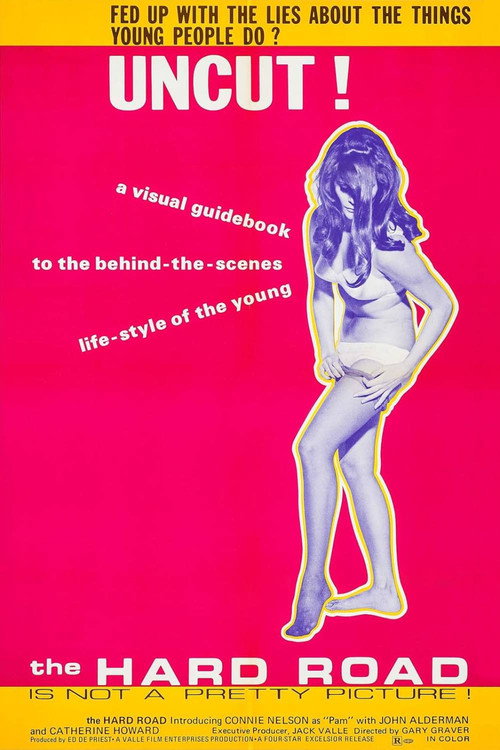
A cautionary tale. At 17, Sherman Oaks high schooler Pam Banner has a baby out of wedlock. The baby is adopted, but Pam's too embarrassed to go back to school, so her dad gets her a job as the receptionist for a talent agent. A rock star takes her to a party, seduces and abandons her; that starts a spiral of partying, free love, and drug use. Pam becomes friends with Jeannie, a hooker who supports Jimmy, a useless druggie. Soon the three of them are living together, and Jimmy seems appealing to Pam. She's missing work more and more often, Jeannie wants out of the life, Jimmy is going through withdrawal, and Pam is in the middle of a maelstrom. Is there any exit for Pam?
1970
1961
1960

1981
1955

1982
1975
1971
No reviews yet. Be the first to share your thoughts on this movie!
Use the rating form above to leave a star rating and optional review.