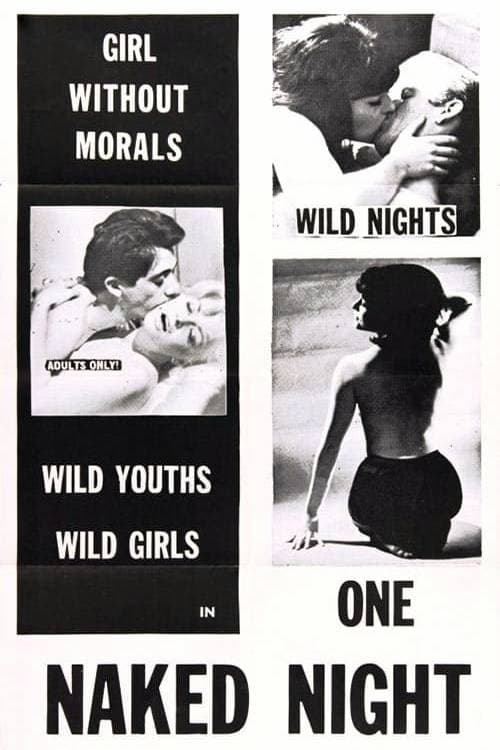
One Naked Night
1965
No user ratings available yet
Representation score: 2.5 out of 10
Representation Score
Fair
1965
Not RatedDirector
Doris Wishman
Runtime
72 minutes
Average Rating
No ratings yetNew Showbiz Analysis
Doris Wishman’s direction offers a gritty look at female autonomy in a genre often dominated by the male perspective. The film highlights a woman's struggle for survival against economic pressures, challenging traditional gender roles. However, the film lacks significant depth in terms of racial, ethnic, or LGBTQ+ representation, which narrows its broader social scope. Ultimately, the film examines individual ability to act in a morally ambiguous urban landscape, trading conventional moral frameworks for a complex, though limited, exploration of a woman's journey.
Category Breakdown
The film does not explicitly include LGBTQ+ characters or identities that go beyond the assumption that everyone is straight. However, the genre often explores unconventional social norms that can hint at queer narratives.
The story focuses on a female protagonist navigating a dangerous urban environment. Her fight for survival and ability to act challenges traditional views of domestic stability and passive roles for women.
Set in a diverse New York City, the film does not confirm a multi-ethnic cast. It likely follows the casting practices typical of 1960s independent exploitation cinema.
The film deviates from traditional Western morality by emphasizing moral relativism. The protagonist prioritizes personal survival and empowerment over conventional religious or family values.
There is no indication of the portrayal of physical or neurodivergent disabilities in the film.
Present on Screen
Limited or Absent
Official Synopsis
A young woman arrives in New York City from Ohio, determined to make it in the big city, but finds herself on a dark path to make ends meet.
1965

1956

1956

1929

1964

1964

1974

1978
No reviews yet. Be the first to share your thoughts on this movie!
Use the rating form above to leave a star rating and optional review.