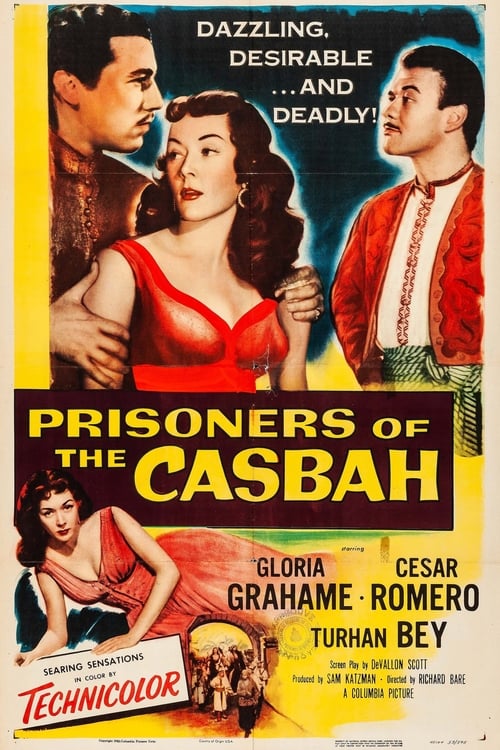
Prisoners of the Casbah
1953
No user ratings available yet
Representation score: 2.3 out of 10

Representation Score
Minimal
1954
RDirector
Don Weis
Runtime
94 minutes
Average Rating
No ratings yetNew Showbiz Analysis
The film is a mid-century adventure-romance that adheres to the conventional genre formulas of the 1950s. It relies on established social hierarchies and traditional romantic structures to drive its narrative. While the Persian setting provides a non-Western backdrop, the storytelling follows traditional patterns rather than challenging cultural norms. The focus remains on patriarchal authority and political alliances through marriage. Ultimately, the film reinforces the status quo of its era through its character roles and plot dynamics.
Category Breakdown
The film centers on traditional heterosexual relationships and marriage customs. It does not include any characters with same-sex relationships or non-binary gender identities.
Princess Fawzia negotiates her marriage but her influence is confined to the household. The Caliph and male characters hold the main positions of power.
Set in Persia, the film moves away from Anglo-centric settings. However, it may rely on stylized Western depictions of Eastern cultures.
The plot follows established monarchical and social hierarchies. It upholds traditional institutions without critiquing religious or political frameworks.
The character descriptions provide no mention of visible or invisible disabilities.
Present on Screen
Limited or Absent
Official Synopsis
In Ispahan, Persia, Hajji Baba is leaving his father's shop to seek a greater fortune, while the Princess Fawzia is trying to talk her father, the Caliph into giving her in marriage to Nur-El-Din, a rival prince known far and wide as mean and fickle. Her father intends for Fawzia to marry a friend and ally, and makes plans to send her to him.
1953
1959

1951
1924
1964

1959

1954

1952
No reviews yet. Be the first to share your thoughts on this movie!
Use the rating form above to leave a star rating and optional review.