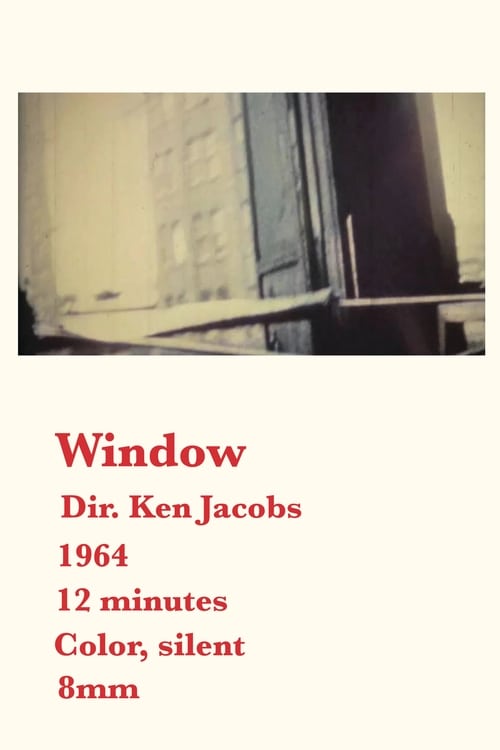
Window
1964
No user ratings available yet
Diversity score: 0.9 out of 10
1970
Not RatedDirector
Hollis Frampton
Runtime
60 minutes
Average Rating
No ratings yetSynopsis
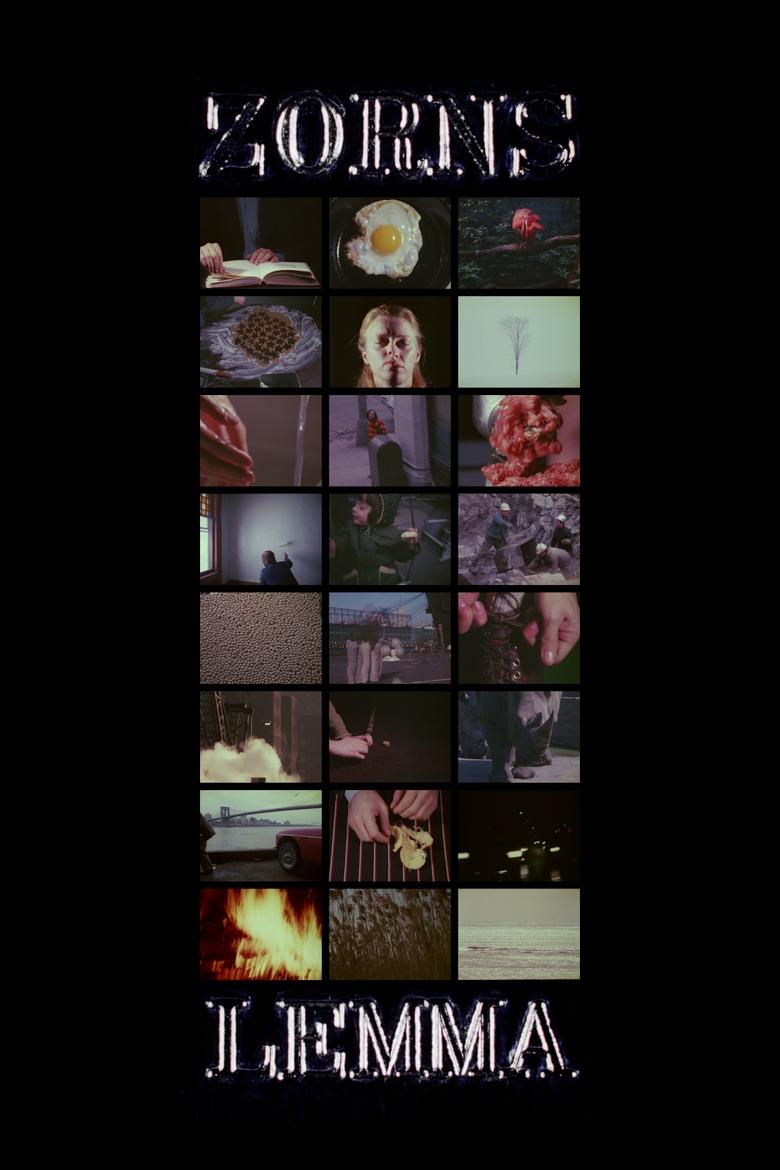
Zorns Lemma is a 1970 American structuralist film by Hollis Frampton. It is named after Zorn's lemma (also known as the Kuratowski–Zorn lemma), a proposition of set theory formulated by mathematician Max Zorn in 1935. Zorns Lemma is prefaced with a reading from an early grammar textbook. The remainder of the film, largely silent, shows the viewer an evolving 24-part "alphabet" (where i & j and u & v are interchanged) which is cycled through, replaced and expanded upon. The film's conclusion shows a man, woman and dog walking through snow as several voices read passages from On Light, or the Ingression of Forms by Robert Grosseteste.
Overall Score
Minimal
Category Breakdown
LGBTQ+ Representation
The film lacks narrative structure and interpersonal relationships. As an experimental work focused on semiotics, it contains no depiction of sexual orientation or gender identity.
Gender Representation
The film eschews character-driven dynamics entirely. A man, woman, and dog appear in the conclusion, but they function as visual components rather than subjects with agency.
Racial & Ethnic Diversity
A montage of faces is used as part of a structural progression. These images serve as semiotic signifiers rather than intentional representations of specific ethnic identities.
Religious & Cultural Diversity
The film rejects Hollywood storytelling in favor of mathematical and philosophical frameworks. It shifts focus toward abstract structures rather than Western social institutions.
Disability Representation
There is no depiction of physical or neurodivergent characters. Disabilities are not utilized as narrative devices within this formalist exercise.
Strengths
Areas for Improvement
AI Analysis
Zorns Lemma is a seminal structuralist film that prioritizes mathematical and linguistic frameworks over traditional storytelling. Its objective is the exploration of language and perception through set theory, which places it outside the realm of identity politics. Because the work functions as a formalist exercise in deconstructing cinematic medium, it does not engage with social hierarchies or intersectional narratives. The absence of character-based storytelling makes traditional diversity metrics largely inapplicable to its intent.
1964

1948
1931
2012
1987

2014

1971
1955
1968
2012
1957
1987
No reviews yet. Be the first to share your thoughts on this movie!
Use the rating form above to leave a star rating and optional review.