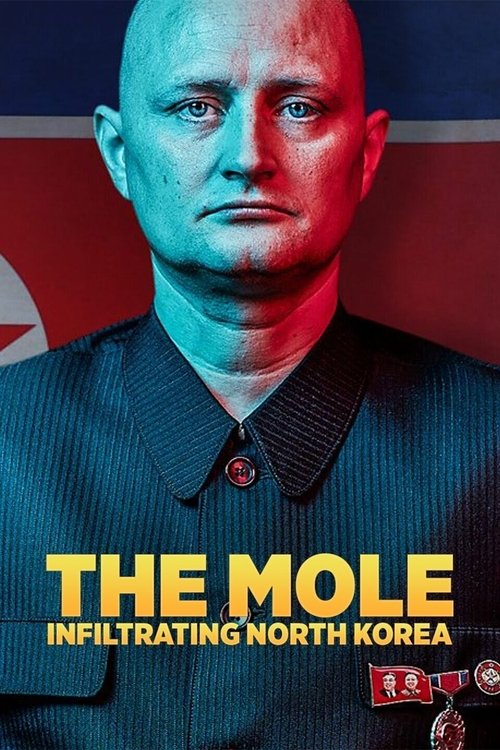
The Mole: Undercover in North Korea
2020
No user ratings available yet
Diversity score: 4.1 out of 10

2009
Director
Linda Kallistová Jablonská
Runtime
76 minutes
Average Rating
No ratings yetSynopsis
Documentary.In its catalogue, a Czech travel agency offers a "journey into the unknown", a tour of North Korea. That spring was the second time since 1990 that a group of Czech tourists set foot in the DPRK. The film follows twenty-seven Czechs who have decided to spend approximately 2,600 Euros on a sightseeing tour of a country which cultivates a cult of personality, maintains concentration camps for its citizens and doesn't hide its development of nuclear weapons. Foreign visitors are only allowed a view of a carefully prepared illusion, thoroughly supervised by "guides". What is more, the North Korean system is starkly reminiscent of our own past. Which emotions do our travellers experience: sympathy, nostalgia or, in contrast, happiness that "we already have this behind us"? How does a Czech person, after being accustomed to eighteen years of freedom and democracy, come to terms with the directives and restrictions of a totalitarian system?
Overall Score
Fair
Category Breakdown
LGBTQ+ Representation
The documentary focuses on geopolitical observation and the experiences of Czech tourists. There are no visible LGBTQ+ character arcs or narratives addressing non-cisnormative identities.
Gender Representation
The film observes a group of twenty-seven travelers, allowing for various gendered experiences. However, it lacks specific evidence regarding the subversion of gender hierarchies or power dynamics.
Racial & Ethnic Diversity
The narrative highlights the 'otherness' of North Korea through the lens of a predominantly white Czech group. It functions as a study of cross-cultural encounters within a homogeneous state.
Religious & Cultural Diversity
The film excels in systemic critique, exploring the tension between democratic values and totalitarian structures. It examines how state-controlled narratives clash with individual agency and historical memory.
Disability Representation
There is no documented evidence regarding the inclusion of subjects with visible or invisible disabilities within the film's narrative.
Strengths
Areas for Improvement
AI Analysis
The film serves as a sociological study of the friction between democratic freedom and totalitarianism. It prioritizes geopolitical critique and the deconstruction of state-sponsored illusions over identity-based storytelling. While the documentary offers a deep dive into systemic power and cultural tension, it lacks specific focus on intersectional identities like LGBTQ+ or disability representation. The narrative is driven by the psychological impact of the North Korean environment on the Czech travelers. Ultimately, the work's value lies in its interrogation of institutional power and the way individuals navigate oppressive frameworks, rather than a diverse cast of characters.
2020

2006
2017
2015

2015

2023

2015
2015
2008
2017
2018

2010
No reviews yet. Be the first to share your thoughts on this movie!
Use the rating form above to leave a star rating and optional review.