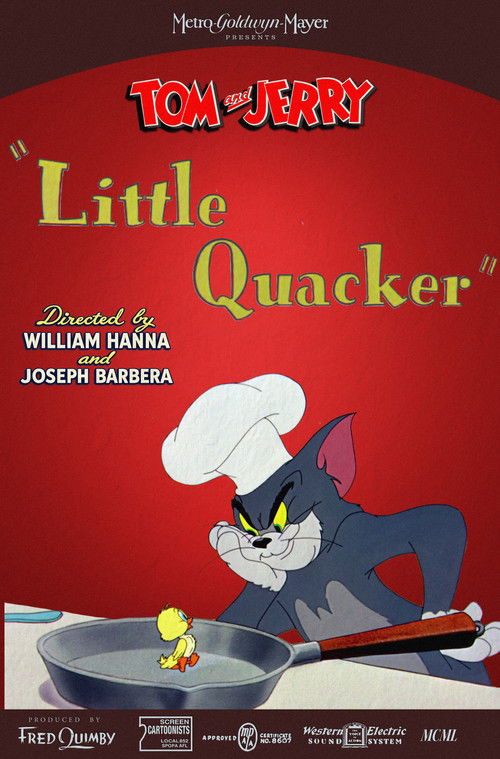
Little Quacker
1950
No user ratings available yet
Representation score: 1.6 out of 10
Representation Score
Minimal
1955
NRDirector
William Hanna, Joseph Barbera
Runtime
6 minutes
Average Rating
No ratings yetNew Showbiz Analysis
This 1955 animated short adheres to the conventional storytelling structures of mid-20th-century studio animation. It prioritizes physical humor and slapstick clichés over any intentional social critique. The characters, being anthropomorphic animals, do not represent human racial, ethnic, or LGBTQ diversity. Instead, they operate within a narrow, idealized domestic setting. Ultimately, the narrative does not aim to disrupt social hierarchies or offer meaningful representation. It remains a standard example of period-specific animation focused on situational comedy rather than social critique.
Category Breakdown
The film does not depict any LGBTQ identities or dynamics. Instead, it focuses on instinctual behaviors and predator-prey relationships.
A female character's protective instinct challenges traditional gender roles, but the overall narrative remains within a typical domestic setting driven by slapstick comedy.
The cast is uniform and does not include any representation of human racial or ethnic diversity. Characters exist in a mid-century domestic environment.
The story emphasizes traditional Western domesticity using animal surrogates. There is no indication of secular or anti-institutional sentiments.
No characters are shown with visible or invisible disabilities. Physical comedy relies on the characters' standard abilities.
Present on Screen
Limited or Absent
Official Synopsis
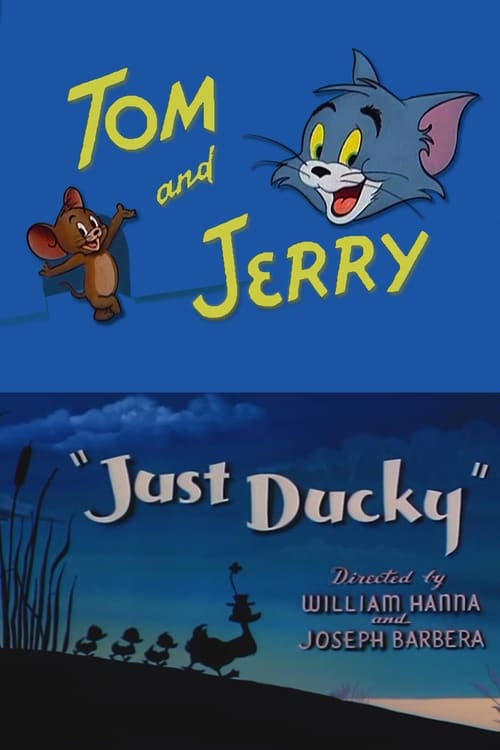
When a duck hatches from the egg underneath Tom, the newborn (Little Quacker) is convinced Tom is his mother. Tom would like to eat the duckling; Jerry is determined to keep that from happening.
1950
1949
1956
1945
1952
1951
1958
1953
No reviews yet. Be the first to share your thoughts on this movie!
Use the rating form above to leave a star rating and optional review.