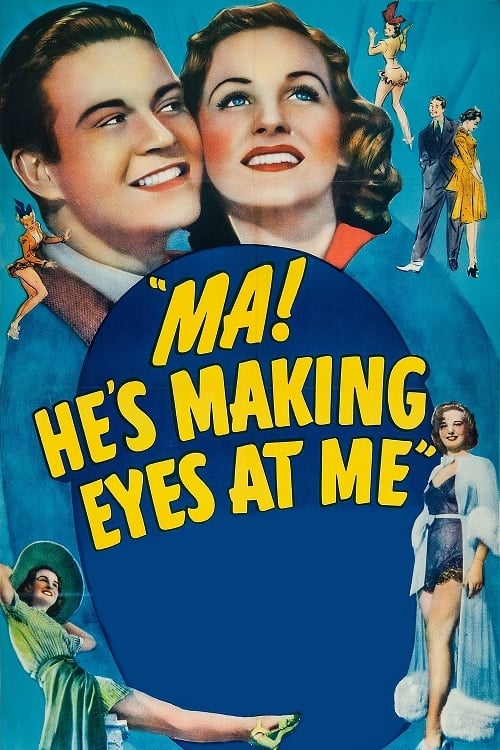
Ma, He's Making Eyes at Me!
1940
No user ratings available yet
Representation score: 1.1 out of 10
Representation Score
Minimal
1942
ApprovedDirector
Charles Lamont
Runtime
60 minutes
Average Rating
No ratings yetNew Showbiz Analysis
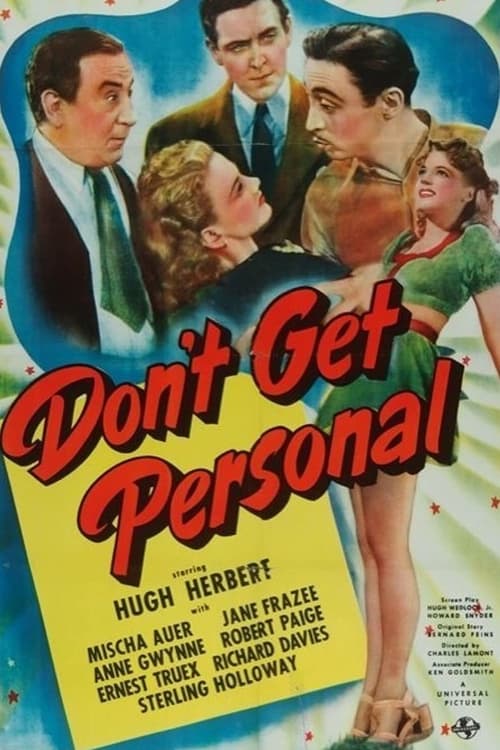
Don't Get Personal is a standard studio comedy that adheres strictly to the mid-century cinematic status quo. The narrative relies on conventional clichés of mistaken identity and romantic confusion, offering little room for social subversion. The film's structure prioritizes traditional professional and romantic hierarchies. It focuses on a male-centric journey through corporate and celebrity landscapes, lacking depth in exploring diverse identities. Ultimately, the work serves as a time capsule of 1940s entertainment, providing a homogeneous view of society without challenging established social or cultural norms.
Category Breakdown
The film follows a traditional romantic comedy structure centered on professional rivalries. It lacks narratives that explore non-binary gender identities or challenge assumptions about straight relationships.
The plot revolves around a male protagonist navigating romantic misunderstandings. Female characters primarily support the male lead's journey.
The narrative reflects the homogeneous casting typical of the 1942 studio system. There are no non-white or non-Anglo-Saxon majority characters.
Themes of inheritance and corporate sponsorship are rooted in traditional Western capitalist structures. The story operates within a conventional moral framework typical of the era.
There is no mention of characters possessing visible or invisible disabilities. No assessment of neurodivergence or physical disabilities is possible from the available information.
Present on Screen
Limited or Absent
Official Synopsis
Elmer Whippet inherits the Whippet Pickles company and sets out to meet the two stars, Mary Reynolds and John Stowe, of the radio program sponsored by his company, as he thinks their on-air quarreling is real. Two former associates, Jules Kinsey and J.M. Snow cross him up by substituting Susan Blair, an office secretary, for Mary and Elmer thinks the show's writer Paul Stevens is John.
1940
1935
1940
1942
1950
1937
1943
1933
No reviews yet. Be the first to share your thoughts on this movie!
Use the rating form above to leave a star rating and optional review.