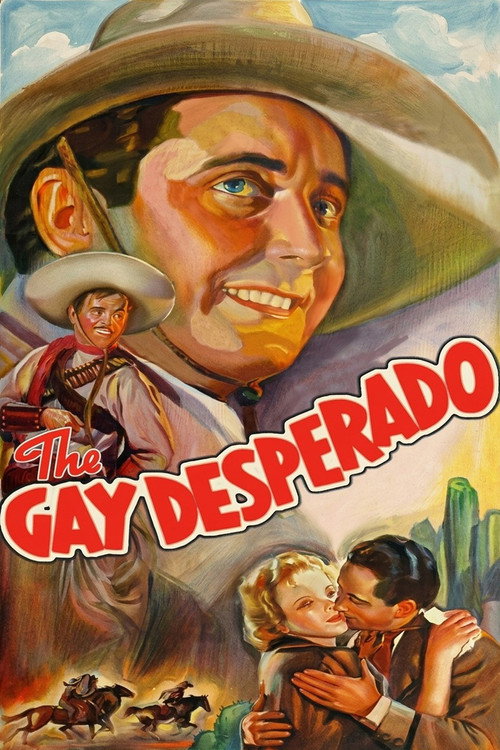
The Gay Desperado
1936
No user ratings available yet
Representation score: 3.9 out of 10
No Poster Available
Representation Score
Minimal
1935
ApprovedDirector
Ralph Staub
Runtime
18 minutes
Average Rating
No ratings yetNew Showbiz Analysis
José is a 1935 musical comedy that adheres strictly to the cinematic conventions of its era. The plot centers on a salesman pursuing a Mexican bandit, a premise that leans heavily on established genre clichés. While the film includes Mexican characters, it does so through the lens of the 'notorious bandit' stereotype. This provides ethnic inclusion but lacks the nuance or character depth required for a more progressive representation. The film maintains a traditional social hierarchy, focusing on male-driven conflict and standard Western narrative structures. It offers little in the way of multi-layered representation or social critique.
Category Breakdown
The film follows a conventional comedic structure typical of the 1930s. There is no representation of non-binary gender identities or critiques of the assumption that everyone is straight or cisgender.
The narrative focuses on a male protagonist and antagonist, suggesting a traditional gender hierarchy without evidence of women taking a leading role or challenging masculine roles.
The film engages with Mexican identity through its central conflict. However, it uses the 'notorious bandit' stereotype, which simplifies cultural complexity.
The plot operates within a traditional Western storytelling framework. It lacks any indication of moral relativism or criticism of Western institutions.
There is no information available regarding the depiction of neurodivergence or physical disabilities within this work.
Present on Screen
Limited or Absent
Official Synopsis
A Salesman tries to locate a notorious Mexican bandit.
1936
1936

1944
1959
1937
1962
1942

1961
No reviews yet. Be the first to share your thoughts on this movie!
Use the rating form above to leave a star rating and optional review.