Okay, José
1935
No user ratings available yet
Representation score: 1.1 out of 10
Representation Score
Limited
1936
ApprovedDirector
Rouben Mamoulian
Runtime
86 minutes
Average Rating
No ratings yetNew Showbiz Analysis
The film stands out for its era by rejecting the Anglo-centric homogeneity common in 1930s Westerns. By centering Mexican characters and folk-influenced musicality, it provides a level of cultural immersion that was progressive for its time. However, the film remains tied to the conservative social structures of 1936. It follows traditional heterosexual romantic arcs and maintains standard gender hierarchies, limiting its overall diversity impact. Ultimately, the film presents a contrast between ethnic and cultural depth while remaining socially conservative in its portrayal of gender and sexuality.
Category Breakdown
The film follows the conventions of a 1930s romantic comedy, focusing on traditional courtship. There are no explicit LGBTQ+ characters or queer subtext in the musical numbers or character arcs.
Jane, the heiress, has some ability to act but her role mainly supports the romantic plot and mistaken identity clichés. The narrative relies on the standard gender hierarchies and courtship dynamics of the era.
Unlike typical 1930s Westerns, this film centers a largely Latino cast and Mexican setting. It gives Mexican revolutionaries a significant role in driving the story and central importance to the plot.
The story explores class friction by contrasting revolutionaries with wealthy estate owners. It offers a lighthearted critique of high-society institutions through its themes of mistaken identity.
There are no prominent depictions of physical or neurodivergent disabilities that impact the narrative arc.
Present on Screen
Limited or Absent
Official Synopsis
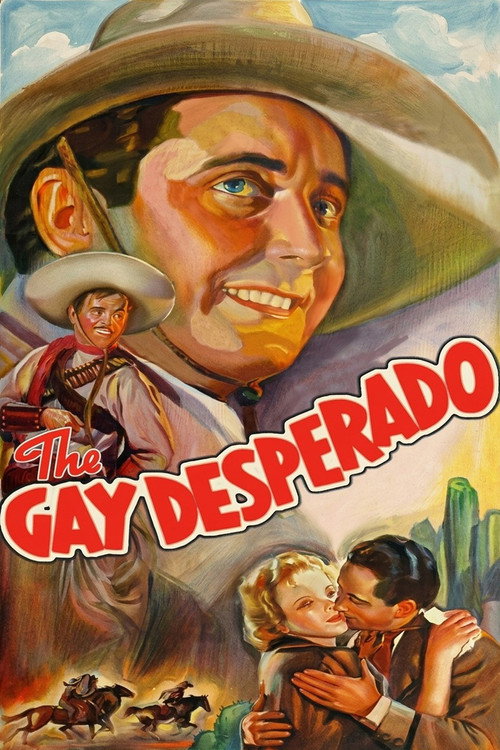
Opera singer Chivo is currently playing a singing cowboy, and Mexican bandito Braganza kidnaps him (along with Jane, an heiress) so he can learn to become more like the American movie gangsters he admires.
1935
1948
1961
1937
1941
1930

1941
1951
No reviews yet. Be the first to share your thoughts on this movie!
Use the rating form above to leave a star rating and optional review.