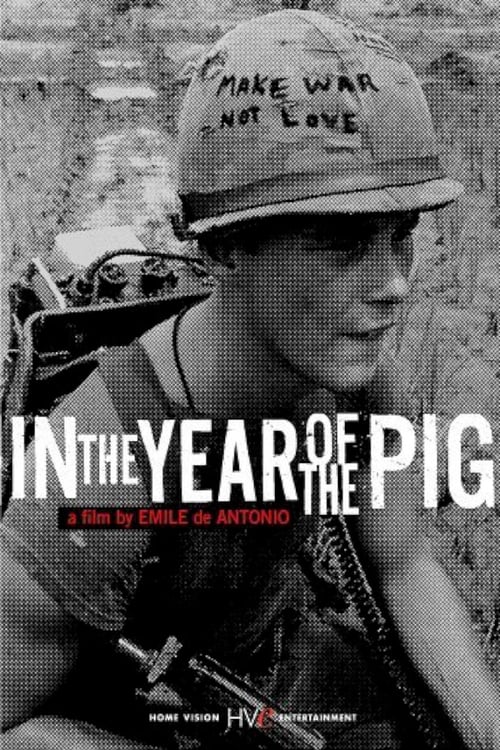
In the Year of the Pig
1969
No user ratings available yet
Representation score: 4.0 out of 10

Representation Score
Good
1974
RDirector
Peter Davis
Runtime
112 minutes
Average Rating
No ratings yetNew Showbiz Analysis
Peter Davis’s documentary is a powerful critique of Western dominance. It excels by focusing on post-colonial perspectives and the lived experiences of the Vietnamese people against the backdrop of U.S. military officials. However, the film is limited by the era's constraints on gender and identity. Its narrative structure heavily favors masculine-coded political and military roles, leaving little space for LGBTQ+ or non-traditional gender narratives. Overall, the film's strength lies in its systemic critique. It serves as a progressive tool for dismantling state narratives, even though it doesn't explore all aspects of individual identity.
Category Breakdown
The film does not focus on LGBTQ+ identities or non-traditional gender narratives. Instead, it emphasizes the human impact of conflict without delving into queer theory or gender non-conformity.
The story mainly revolves around masculine-coded roles in military and political leadership. While it includes domestic viewpoints, it adheres to traditional 1970s gender hierarchies without challenging these roles.
The film stands out by highlighting the Vietnamese peasantry against American interference. It shifts the focus away from Western perspectives by emphasizing the ability to act of non-Western individuals to illustrate racial and socioeconomic disparities.
This influential work breaks down Western institutions such as the military-industrial complex. It employs moral relativism to reveal the disconnect between American political rhetoric and the harsh realities of combat.
The documentary portrays the physical and psychological trauma of war, including visible injuries and mental distress. These depictions emphasize systemic causes of harm rather than individual ability to act.
Present on Screen
Limited or Absent
Official Synopsis
Many times during his presidency, Lyndon B. Johnson said that ultimate victory in the Vietnam War depended upon the U.S. military winning the "hearts and minds" of the Vietnamese people. Filmmaker Peter Davis uses Johnson's phrase in an ironic context in this anti-war documentary, filmed and released while the Vietnam War was still under way, juxtaposing interviews with military figures like U.S. Army Chief of Staff William C. Westmoreland with shocking scenes of violence and brutality.
1969
2010

1971
2003
2005

2023

1979
1968
No reviews yet. Be the first to share your thoughts on this movie!
Use the rating form above to leave a star rating and optional review.