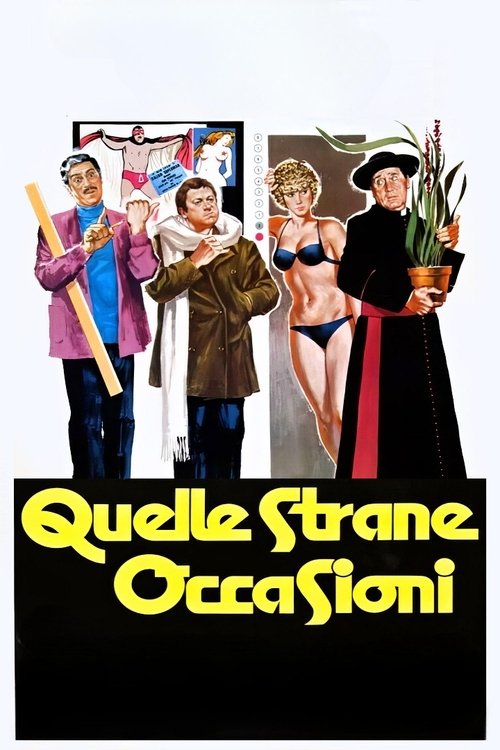
Strange Occasion
1976
No user ratings available yet
Representation score: 3.2 out of 10
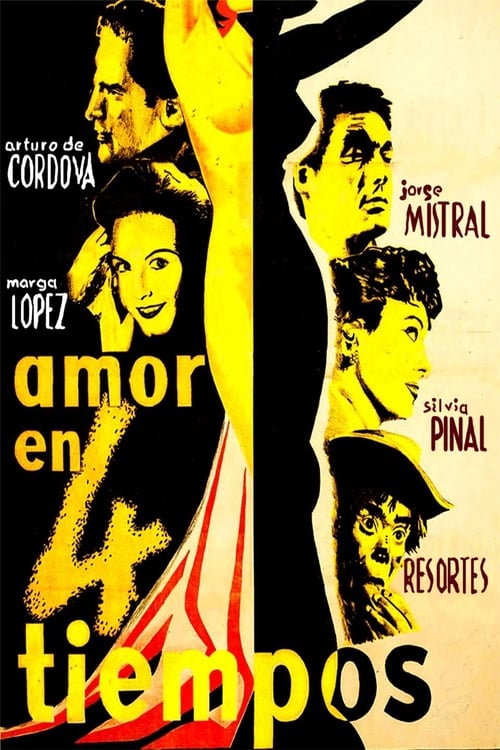
Representation Score
Limited
1955
Director
Luis Spota
Runtime
92 minutes
Average Rating
No ratings yetNew Showbiz Analysis
Love in Four Parts reflects the conservative social and religious landscape of mid-century Mexico. While it offers a non-Western perspective by centering a Mexican cast and production team, the film adheres to traditional cinematic norms of the time. Without challenging these norms, the film remains a standard example of the era’s conventions. The anthology structure likely relies on established genre clichés that reinforce conventional gender roles and moral frameworks. Without evidence of complex interactions of different aspects of identity, the film remains a typical representative of the era's cinematic norms.
Category Breakdown
The film does not show any non-binary or LGBTQ+ identities or same-sex relationships. It follows the assumption that everyone is straight and cisgender, which was typical of 1955 Mexican cinema.
Characters likely follow established gender roles common to the era. Women are likely defined by their domestic or romantic roles rather than intellectual or physical abilities.
The production centers a non-Anglo-Saxon cast, providing a baseline of ethnic representation. However, it likely emphasizes specific mestizo or class-based archetypes common to the period.
The narrative likely upholds traditional Catholic morality and the nuclear family. There is no indication of secularism or critiques of religious institutions.
There is no specific information available regarding the depiction of physical or neurodivergent identities in this anthology.
Present on Screen
Limited or Absent
Official Synopsis
Anthology film, four episodes.
1976
1962
1965
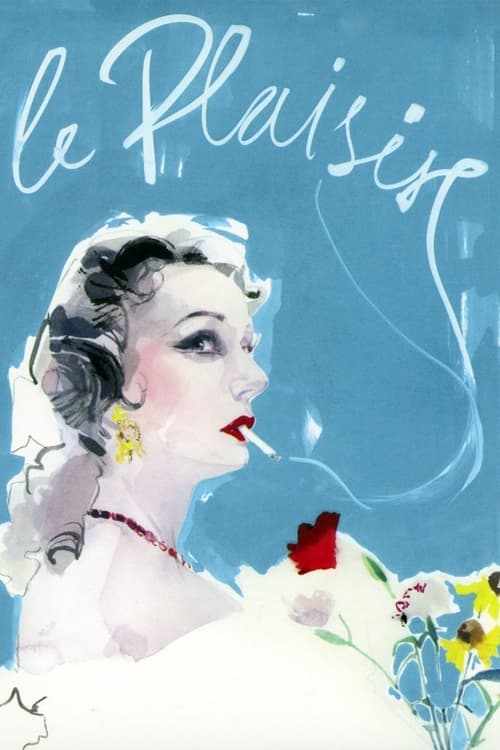
1952
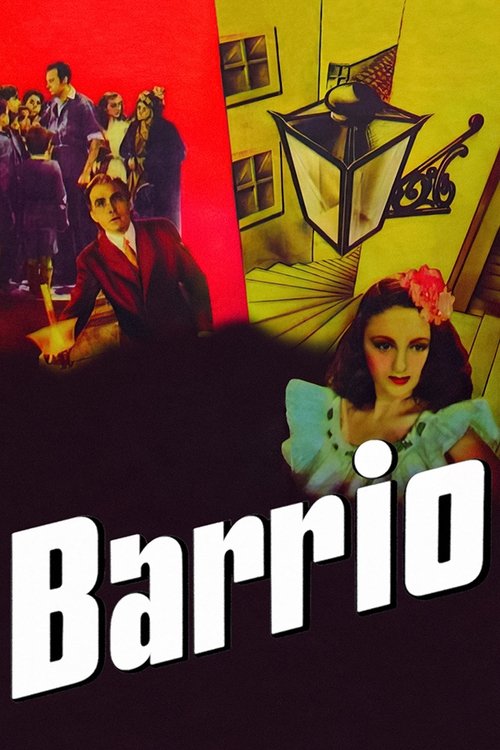
1947
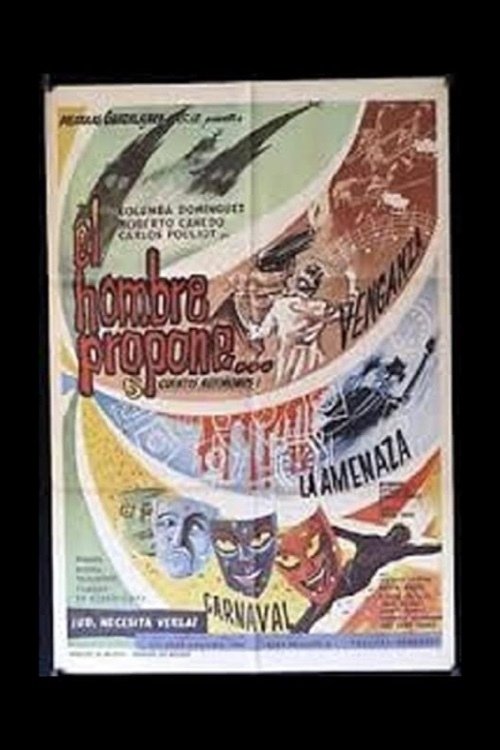
1965

1965
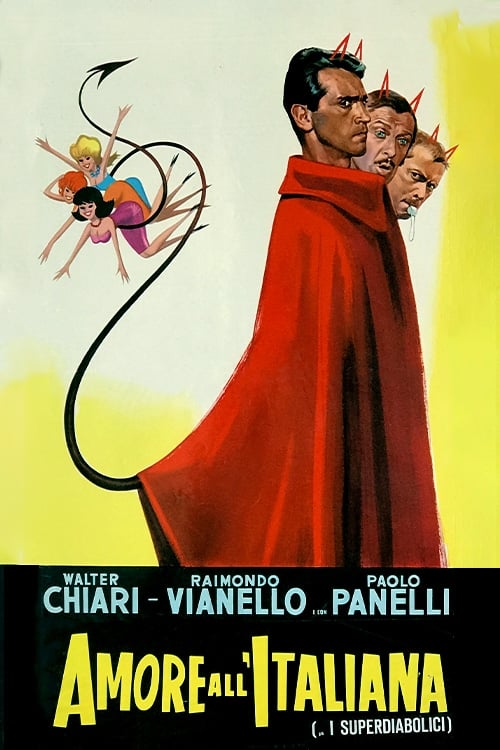
1966
No reviews yet. Be the first to share your thoughts on this movie!
Use the rating form above to leave a star rating and optional review.