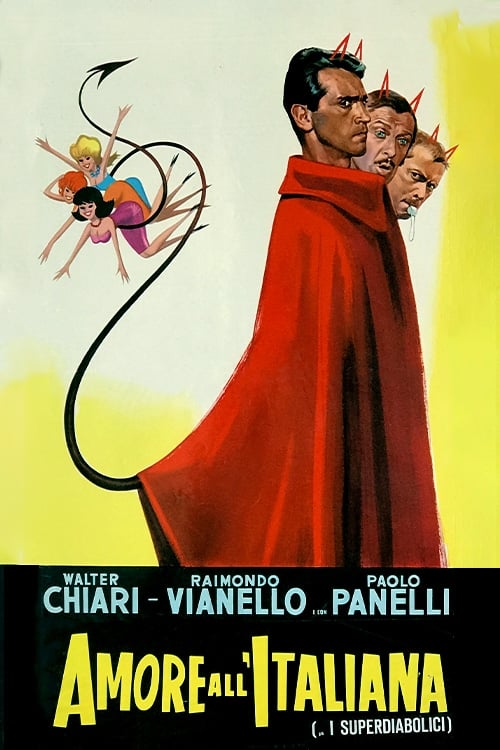
Love Italian Style
1966
No user ratings available yet
Representation score: 2.1 out of 10
Representation Score
Minimal
1965
Director
Mario Costa
Runtime
92 minutes
Average Rating
No ratings yetNew Showbiz Analysis
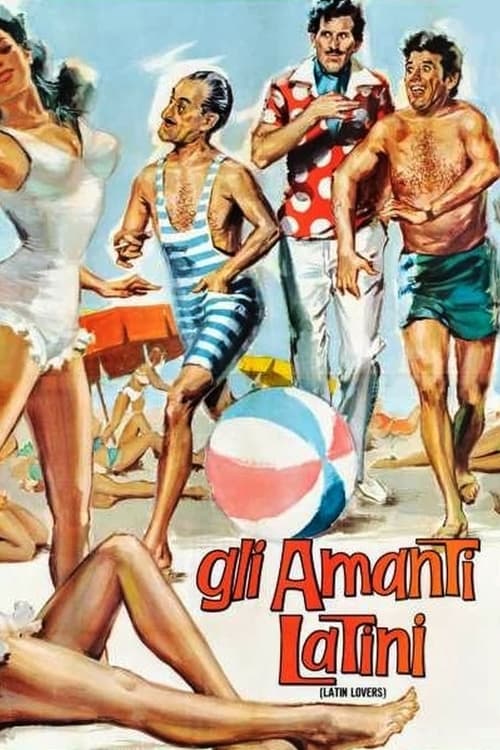
Latin Lovers is a period-specific anthology that prioritizes escapism and genre conventions over social commentary. It reflects the social mores of 1960s Italy through its emphasis on traditional romantic clichés and farce. The film reinforces existing hierarchies rather than challenging them. Its homogeneous casting and focus on traditional heterosexual relationships create a narrow, culturally specific experience that lacks depth in representing diverse identities. Ultimately, the production serves as a commercial product of its era, emphasizing a stable, conventional social order through its vignettes.
Category Breakdown
The film focuses solely on traditional heterosexual relationships and does not include any depictions of LGBTQ+ identities or same-sex intimacy.
Female characters drive much of the comedic action, but the power dynamics often reinforce traditional gender roles rather than challenging them.
The cast and setting are predominantly white and European, with no representation of diverse ethnic backgrounds.
The narrative celebrates an idealized Mediterranean lifestyle and traditional social structures, avoiding any critique of Western institutions such as family or religious authority.
There are no characters with visible or invisible disabilities, and the film presents an idealized, able-bodied world typical of 1960s musical comedies.
Present on Screen
Limited or Absent
Official Synopsis
The film is composed of five episodes which depict Italians' love lives in the 1960s.
1966
1963
1966
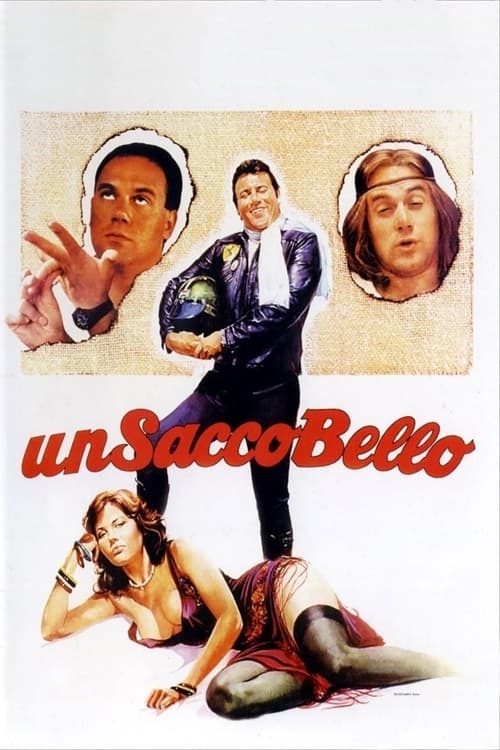
1980
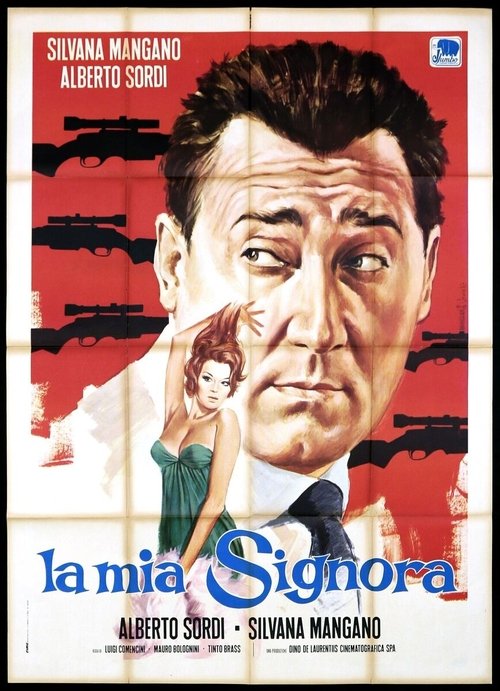
1964
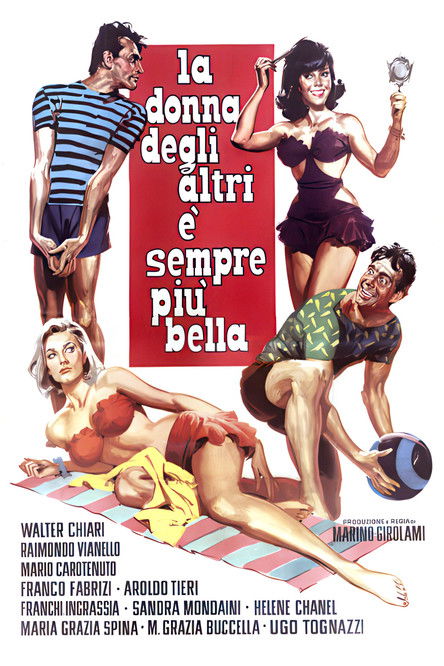
1963
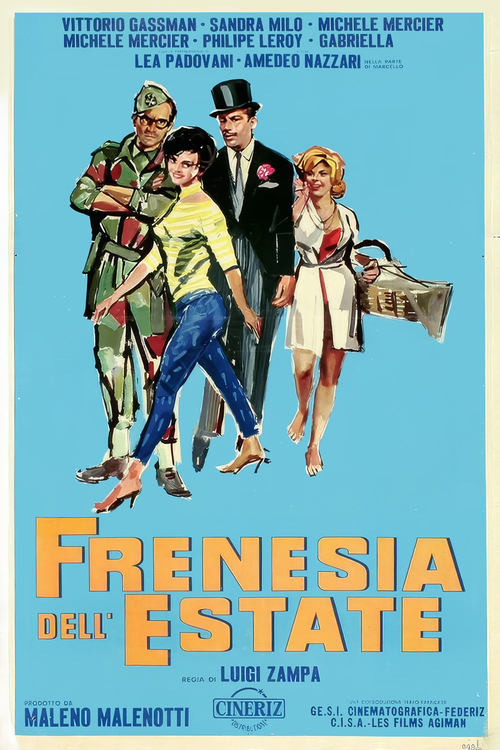
1964
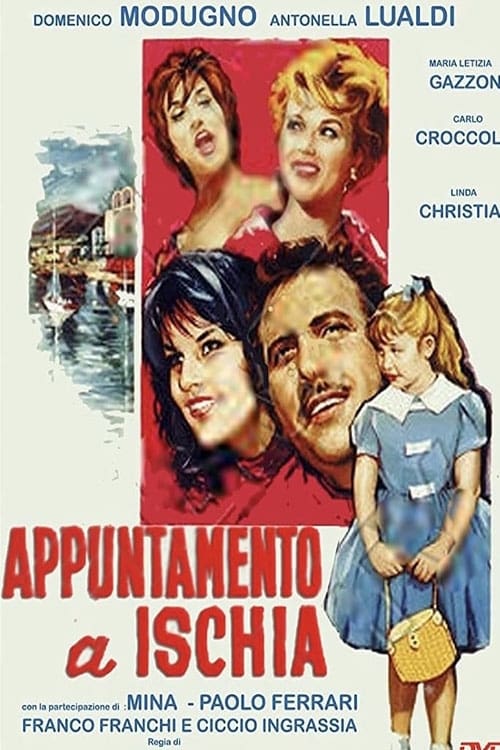
1960
No reviews yet. Be the first to share your thoughts on this movie!
Use the rating form above to leave a star rating and optional review.