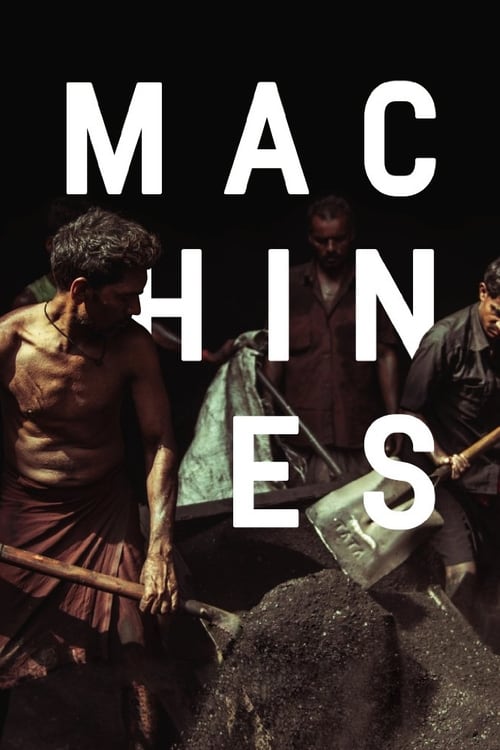
Machines
2017
No user ratings available yet
Diversity score: 6.5 out of 10

2010
Director
Allan Sekula, Noël Burch
Runtime
112 minutes
Average Rating
No ratings yetSynopsis
Details the catastrophic effects globalization has wrought on the ship, truck and train industries. We visit displaced farmers and villagers in Holland and Belgium, underpaid truck drivers in Los Angeles, seafarers aboard mega-ships shuttling between Asia and Europe, and factory workers in China, whose low wages are the fragile key to the whole puzzle. At a moment when collective bargaining rights are under attack in the United States, and China continues to bow to foreign pressures to prevent such rights from being granted at all, this film asks: Is capitalism the Trojan horse that turns on its inventors?
Overall Score
Good
Category Breakdown
LGBTQ+ Representation
The documentary focuses on macro-economic structures and labor movements. It does not feature specific LGBTQ+ characters or narratives centered on non-cisnormative identities.
Gender Representation
The narrative prioritizes class and labor over gendered hierarchies. While it disrupts traditional industrial tropes, it lacks a specific focus on gendered power dynamics.
Racial & Ethnic Diversity
The film utilizes a globalized lens to examine the intersection of geography and race. It highlights seafarers from Asia and Chinese factory workers to disrupt Anglo-centric views.
Religious & Cultural Diversity
The film offers a profound critique of neoliberal capitalism and Western dominance. It frames containerization as a mechanism of systemic oppression against local sovereignty.
Disability Representation
The film touches upon the physical toll of maritime and industrial labor. However, it lacks intentional representation of neurodivergence or visible disabilities as central agency.
Strengths
Areas for Improvement
AI Analysis
The film excels at deconstructing Western-centric histories by centering the labor of the Global South. Its strength lies in its systemic critique of how global logistics maintain racialized and geopolitical power structures. However, the documentary's focus on macro-economics results in a lack of representation for specific identities. It misses opportunities to explore how gender, queer identity, or disability intersect with the physical and social realities of labor exploitation. Ultimately, the work is a sophisticated political tool that prioritizes systemic analysis over individual character-driven diversity.
2017

2010
2011

2005

2006
2012
2005

2014

2005

2001

2009
2019
No reviews yet. Be the first to share your thoughts on this movie!
Use the rating form above to leave a star rating and optional review.