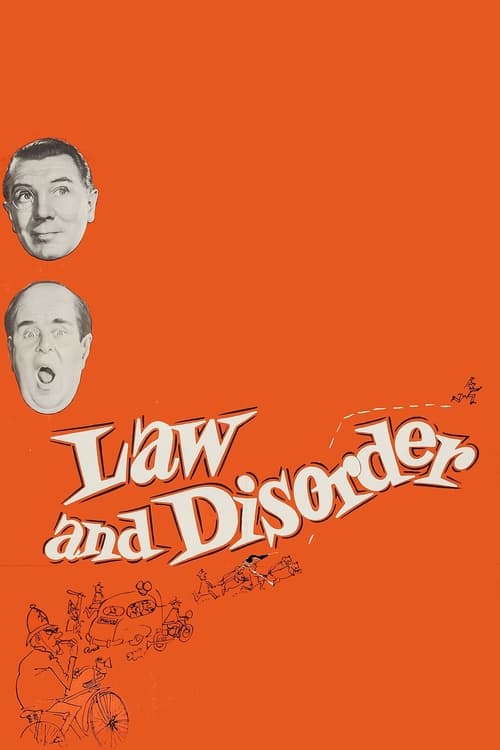
Law and Disorder
1958
No user ratings available yet
Diversity score: 2.9 out of 10

1962
Director
Édouard Molinaro
Runtime
111 minutes
Average Rating
No ratings yetSynopsis
André Laroche, an industrialist, has just passed away. Face to his grave, as he is being buried, Anne de Vierne, the wife of a magistrate, confesses to her son François that Laroche was in fact Lupin and that he is his natural child. But he is not the gentleman thief's only offspring! Lupin had indeed another son by a housemaid, Gérard Dagmar, a dancer, magician and - occasionally - burglar. Which complicates the task of François who, to respect the last wishes of the testator, has gone in search of the treasure of Poldavia. For he keeps finding Gérard on his way and his efforts are constantly thwarted by his half-brother. Will Gérard prevent François from becoming the worthy successor to their father or will the two young men decide to join forces? That is the question.
Overall Score
Minimal
Category Breakdown
LGBTQ+ Representation
The film follows a traditional heteronormative structure. There is no evidence of non-cisnormative identities or same-sex intimacy, focusing instead on standard 1960s romantic tropes.
Gender Representation
Female characters primarily serve as narrative foils or romantic interests. Agency remains centered on male heirs, reinforcing classical masculine ideals of charm and social maneuvering.
Racial & Ethnic Diversity
The production reflects the demographic homogeneity of mid-century French cinema. The cast is predominantly white and European, centered within high-society Parisian circles.
Religious & Cultural Diversity
The narrative engages with the gentleman thief trope through a lens of class-based sophistication. It maintains a focus on upper-class social structures without challenging Western institutions.
Disability Representation
No visible or invisible disabilities are portrayed within the central narrative. All characters are depicted as able-bodied.
Strengths
Areas for Improvement
AI Analysis
This 1962 comedy is a product of its era, prioritizing lighthearted escapism and established genre conventions over social critique. The narrative architecture relies heavily on traditional hierarchies, particularly regarding gender and social class. The film functions within a very narrow demographic scope, reflecting the homogeneity of mid-century French cinema. It lacks intersectional perspectives, focusing instead on the wit and competence of its male protagonists within a stable, upper-class framework.
1958
1961
1962
1960
1976
1956
1964
1973
1952
1959
1962

1975
No reviews yet. Be the first to share your thoughts on this movie!
Use the rating form above to leave a star rating and optional review.