The Time of His Life
1955
No user ratings available yet
Representation score: 1.2 out of 10
Representation Score
Minimal
1958
NRDirector
Charles Crichton
Runtime
76 minutes
Average Rating
No ratings yetNew Showbiz Analysis
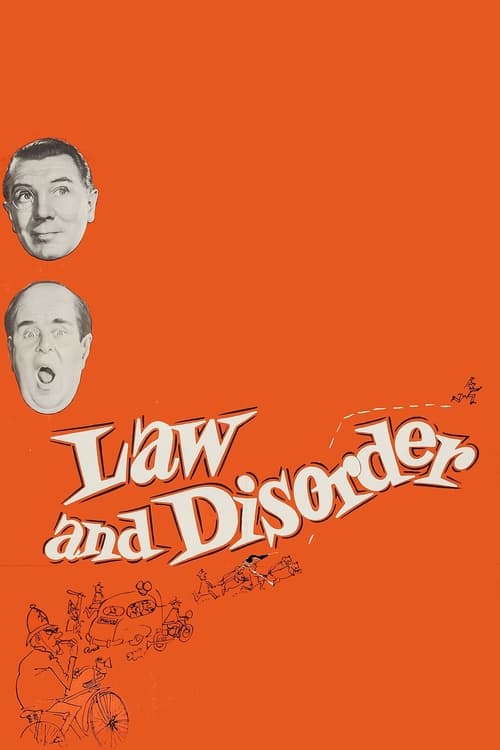
Law and Disorder is a mid-century British comedy that prioritizes traditional social structures and familial bonds. The narrative structure focuses on a generational conflict between a criminal father and his son, emphasizing domesticity and the preservation of reputation. The film operates within a conventional, homogeneous framework. It lacks representation that reflects multiple aspects of identity, focusing instead on the tension between individual eccentricity and established legal institutions. The character dynamics are driven by a male-dominated hierarchy. Ultimately, the work aligns with mid-century cinematic trends of social conformity. It does not seek to challenge institutions or present diverse perspectives, functioning instead as a character-driven study of social standing and deception.
Category Breakdown
The film does not include any characters with non-straight identities or same-sex relationships. The story focuses solely on the father-son relationship between Percy and Colin.
The story revolves around a male-dominated hierarchy involving a trickster, his son, and a judge. There are no indications of women's ability to drive the story or the subversion of traditional gender roles.
The film seems to operate within a homogeneous social framework typical of 1958. There is no mention of diverse casting or ethnic representation in the narrative.
The plot explores the tension between law and disorder through a traditional lens. It emphasizes the preservation of the nuclear family and social respectability.
There is no mention of characters with visible or invisible disabilities. The synopsis does not provide information regarding disability representation.
Present on Screen
Limited or Absent
Official Synopsis
When Percy Brand, a habitual confidence trickster, keeps being sent down, he goes to great lengths to ensure that his son Colin, does not find out about his criminal past. But when Colin becomes an assistant to the Judge, who is about to try Percy for his latest escapade, Percy and his gang have to come up with a plan, to stop them meeting in court.
1955

1964
1956
1976
1969
1960
1960
1940
No reviews yet. Be the first to share your thoughts on this movie!
Use the rating form above to leave a star rating and optional review.