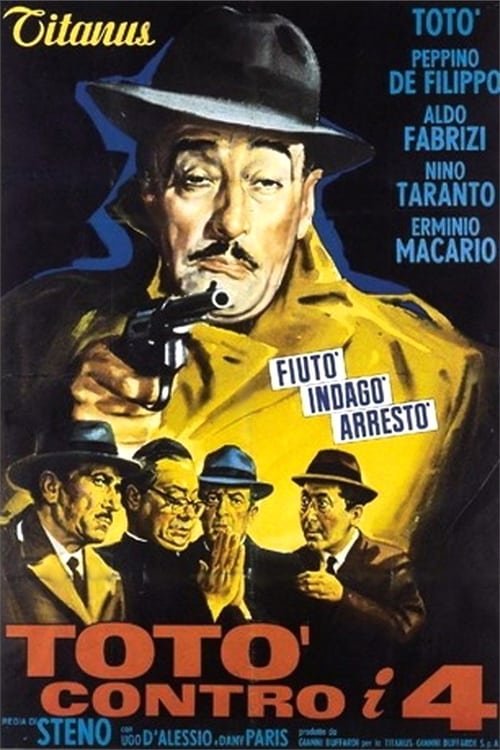
Totò vs the Four
1963
No user ratings available yet
Diversity score: 2.2 out of 10
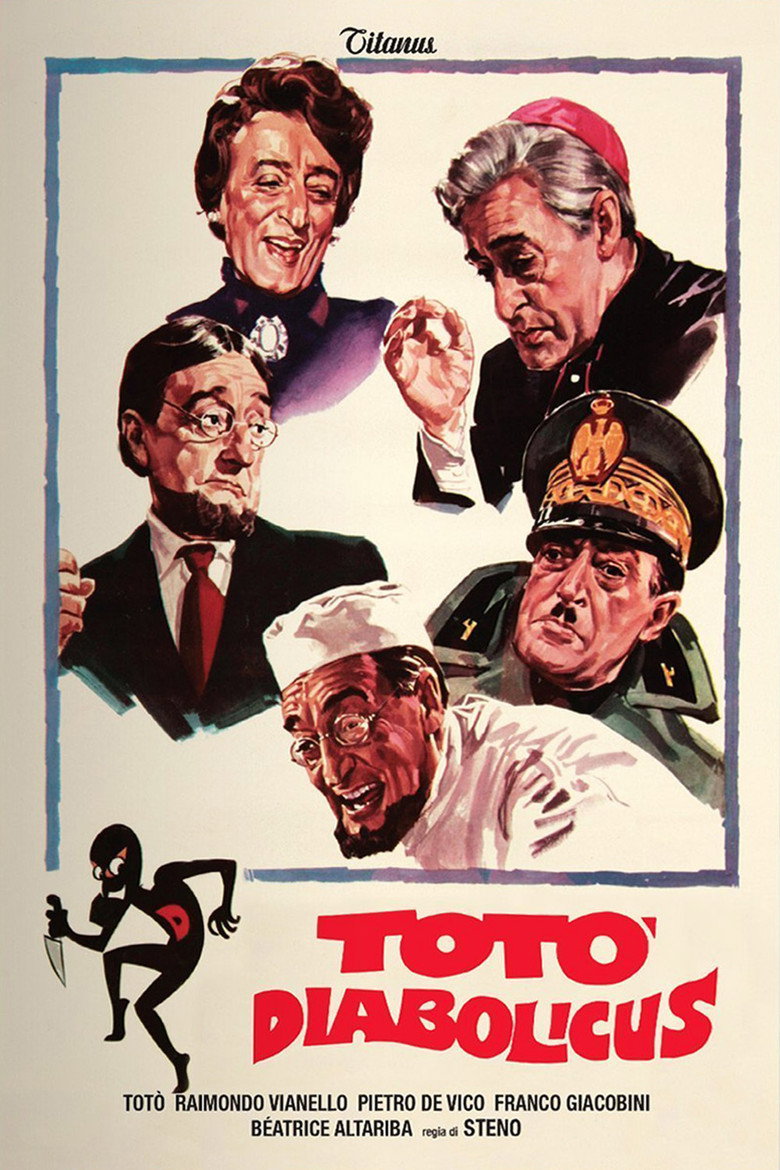
1962
Director
Steno
Runtime
92 minutes
Average Rating
No ratings yetSynopsis
The marquis Galeazzo di Torre Alta is murdered by a mysterious killer who calls himself Diabolicus. His heirs are his three brothers and a sister, but all of them, with the exception of Monsignor Antonino di Torre Alta, are killed by Diabolicus. The police are unable to solve the case, but when Antonino gives his inheritance to Pasquale Bonocore, illegitimate son of his father and Pasquale is in prison and therefore can't be the killer, all the clues are in the hand of the police.
Overall Score
Limited
Category Breakdown
LGBTQ+ Representation
The film lacks any discernible presence of LGBTQ+ characters. It operates within the conventional social frameworks of 1960s Italy without exploring queer identity.
Gender Representation
Female characters function within traditional roles, primarily serving as secondary figures in the social hierarchy. The narrative is driven by male agency and mid-century archetypes.
Racial & Ethnic Diversity
The cast is predominantly white within a culturally homogeneous Italian context. The film does not engage with racial or ethnic diversity or metaphors for it.
Religious & Cultural Diversity
The presence of a Monsignor suggests a traditional religious framework. The plot offers unintentional commentary on social legitimacy through themes of inheritance and illegitimacy.
Disability Representation
There are no visible or invisible disabilities portrayed with agency. No characters have narratives defined by neurodivergence or physical impairment.
Strengths
Areas for Improvement
AI Analysis
Totò diabolicus is a product of its specific historical and cultural milieu, prioritizing character-driven slapstick over the deconstruction of social hierarchies. The film functions as a traditional comedic vehicle that adheres to the social norms of 1962 Italy. While the film uses satire to examine class dynamics and authority, it does so through a narrow lens. The narrative lacks the progressive architecture required for intersectional storytelling, focusing instead on the struggles of the 'everyman' against rigid structures. Ultimately, the production lacks representation across most modern diversity metrics, reflecting the era's conventional cinematic standards rather than a desire to challenge systemic identities.
1963

1961
1968
1962
1957
1962
1949
1960
1950
1951

1973
1981
No reviews yet. Be the first to share your thoughts on this movie!
Use the rating form above to leave a star rating and optional review.