
Rekrut 67 Petersen
1952
No user ratings available yet
Diversity score: 2.8 out of 10
1962
Director
Poul Bang
Runtime
80 minutes
Average Rating
No ratings yetSynopsis
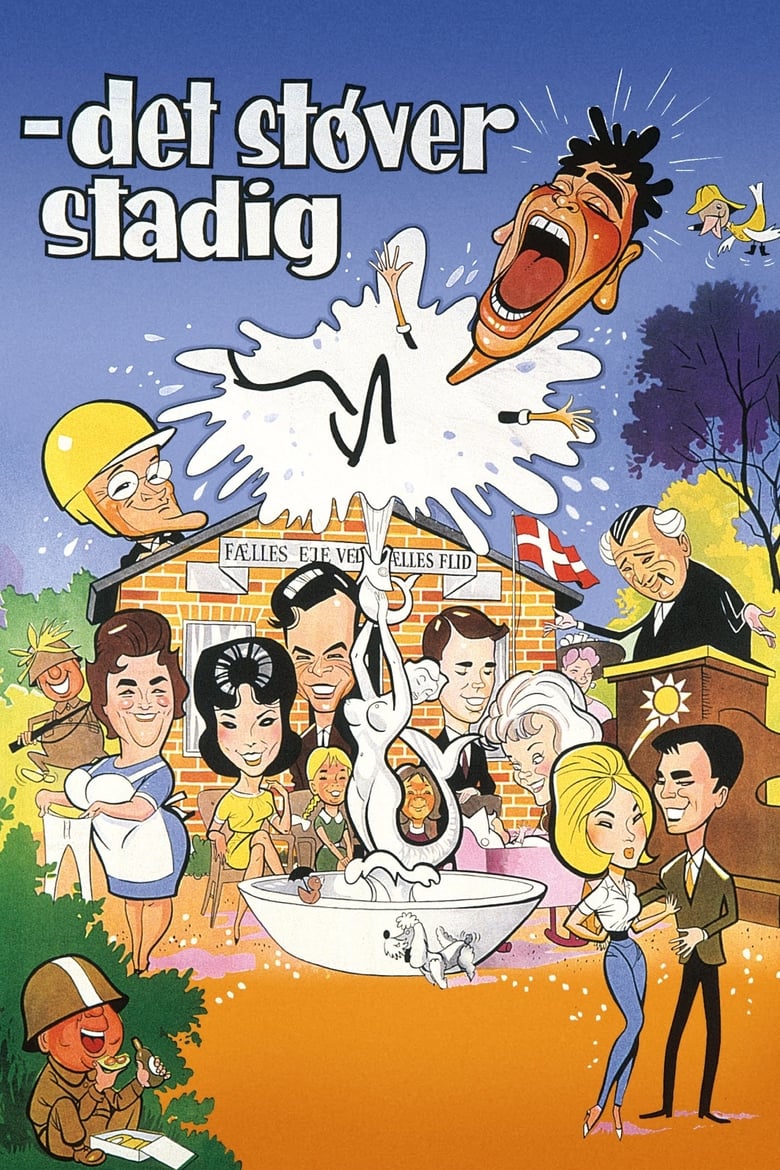
Det Støver Stadig (It's Still Dusting) is the second film in the popular "Dust series" (Støv På Hjernen, Støv For Alle Pengene). Once again, Arvid Müller and Aage Stentoft wrote the festive script, which introduced new customs and traditions to the Danish housing market. The small community in the "sleepy town" is easily recognizable, but major changes have taken place since last time, because the residents of Solvænget have—with municipal support—bought the property they live in, and (something completely new at the time) the wives have had to take jobs to make ends meet! Mrs. Rigmor Hansen is absolutely brilliant as the manager of a Quick laundry. Her "truths" about the new everyday life in Denmark are crystal clear—and eternally young. The property's first general meeting with the guys in the stairwell – and the presentation of the first annual accounts – are golden scenes from the golden age of Danish family films.
Overall Score
Limited
Category Breakdown
LGBTQ+ Representation
The film operates within the conventional social frameworks of 1962. There are no LGBTQ+ characters or narratives that critique heteronormativity.
Gender Representation
Wives enter the workforce to navigate new economic realities, disrupting traditional domestic hierarchies. Rigmor Hansen displays high agency as a laundry manager, subverting the submissive housewife trope.
Racial & Ethnic Diversity
Set in a homogeneous Danish housing cooperative, the film lacks non-white or non-Anglo-Saxon casting. No diverse ethnic identities are included within the Solvænget community.
Religious & Cultural Diversity
The story explores the tension between traditional community structures and modernizing municipal influences. It focuses on the festive, communal aspects of local life rather than institutional critique.
Disability Representation
There is no discernible mention of characters with visible or invisible disabilities.
Strengths
Areas for Improvement
AI Analysis
Still Dust on the Brain serves as a period piece reflecting the socioeconomic transitions of early 1960s Denmark. While it lacks modern intersectional breadth, it captures a specific moment of shifting social contracts through its focus on cooperative living. The film's primary strength lies in its depiction of evolving gender roles. By moving female characters from purely domestic spheres into professional roles, the narrative acknowledges women as active, competent economic participants. However, the film remains deeply rooted in the era's homogeneity. It offers almost no representation of racial, ethnic, or LGBTQ+ identities, functioning instead as a reflection of a largely uniform social environment.
1952
1961

1963

1968
1963

1959

1996

1953
1955
1959
1955
1959
No reviews yet. Be the first to share your thoughts on this movie!
Use the rating form above to leave a star rating and optional review.