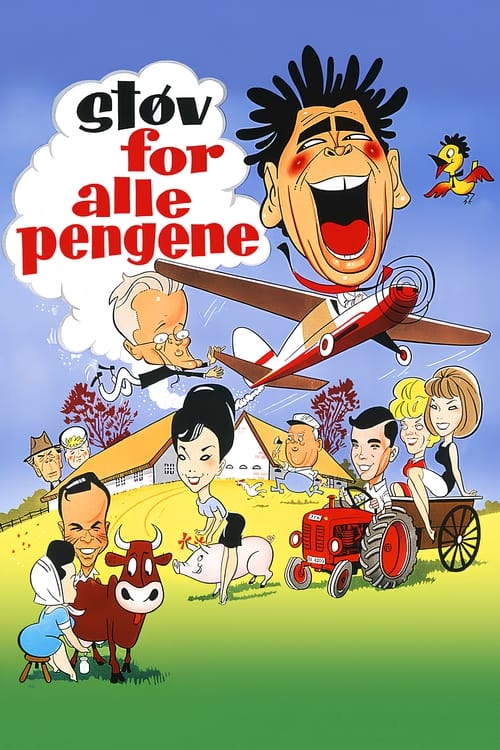
Dust for all the Money
1963
No user ratings available yet
Representation score: 1.8 out of 10
Representation Score
Minimal
1955
Director
Poul Bang
Runtime
98 minutes
Average Rating
No ratings yetNew Showbiz Analysis
This 1955 Danish comedy reflects the social norms of mid-century Europe. The narrative follows the conventional storytelling and social customs of the post-war era. The film upholds traditional hierarchies without challenging them. It focuses on middle-class archetypes within a localized cultural context. Overall, the film lacks intentional diversity and sticks to the established gendered and cultural norms of 1950s Denmark.
Category Breakdown
The film does not include any LGBTQ+ characters or stories involving non-straight relationships. It follows typical assumptions about everyone being straight or cisgender.
Women in the film mainly act as catalysts for men’s actions rather than having their own independent roles. The story uses traditional stereotypes, such as a wife defined by domestic instability.
The setting implies a uniform Danish society with no signs of racial diversity or inclusion of various ethnic backgrounds.
The plot emphasizes mid-century Western social norms and traditional institutions. It centers on middle-class activities and established professional roles like lawyers and judges.
There are no characters with visible or invisible disabilities mentioned in the film. No information is available to assess this category.
Present on Screen
Limited or Absent
Official Synopsis
It all begins innocently enough on a summer Sunday morning, with the sun shining from a cloudless sky. Mrs. Hald sends her two young twenty-year-old daughters on a cycling and swimming trip to North Zealand. Mr. Hartsen, a district court attorney who, incidentally, is married to a very jealous and combative wife, is taking his newly acquired Chevrolet for a long drive. When the two girls have everything stolen from them while swimming in the sea, they stop the first motorist they meet—and unfortunately, this happens to be our friend, district court attorney Hartsen.
1963
1953
1964
1961
1961
1961
1974
1955
No reviews yet. Be the first to share your thoughts on this movie!
Use the rating form above to leave a star rating and optional review.