Late Dates
1980
No user ratings available yet
Representation score: 3.6 out of 10
Representation Score
Fair
1986
RDirector
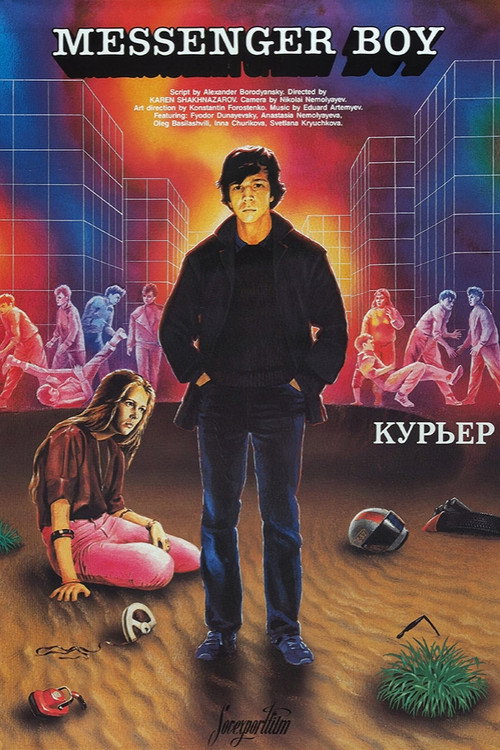
Karen Shakhnazarov
Runtime
88 minutes
Average Rating
No ratings yetNew Showbiz Analysis
Courier is a profound study of the existential void during the Perestroika era. It replaces traditional coming-of-age growth with a postmodern sense of irony and aimlessness, capturing the fragmentation of identity within a decaying social structure. While the film lacks diversity in terms of race and LGBTQ+ identities, it excels in its thematic deconstruction of authority. It prioritizes moral relativism, portraying the disillusionment of the youth as a valid response to disconnected state institutions. Ultimately, the film's strength lies in its cultural critique rather than its diverse casting, offering a sophisticated look at a society in transition.
Category Breakdown
The film adheres to an assumption that everyone is straight or cisgender. There are no visible representations of LGBTQ+ identities or narratives that question traditional romantic relationships.
The film showcases nuanced power dynamics rather than submissive stereotypes. Katya demonstrates significant influence by actively engaging in Ivan's social maneuvers to challenge her father's authority.
Set in late-Soviet Moscow, the film portrays a homogeneous urban population. The casting reflects the specific socioeconomic context of the Soviet middle and working classes.
The narrative provides a progressive critique of institutional authority and traditional morality. It frames youthful indifference as a sophisticated reaction to a crumbling, stagnant social order.
There are no prominent depictions of physical or neurodivergent disabilities. The characters' struggles are primarily existential and psychological rather than focused on physical impairments.
Present on Screen
Limited or Absent
Official Synopsis
Ivan Mirosnikov, a cheeky young man in the Gorbachev era, is trying to figure out what to do with his life (he's not in college, and the 2-year mandatory military service is looming large ahead of him). Meanwhile, he lives with his divorced mother, and works as a courier at a Russian newspaper. Through his job, he meets patronizing Professor Kuznetzov and his rebellious daughter Katya. To annoy the professor, Ivan claims to have an affair with Katya. To his surprise, Katya backs his story up.
1980
1980
1982
1962
1987
1979

1990

1979
No reviews yet. Be the first to share your thoughts on this movie!
Use the rating form above to leave a star rating and optional review.