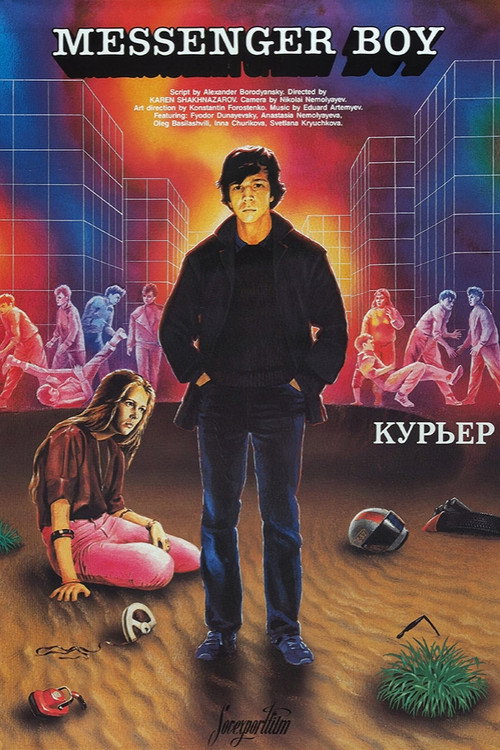
Courier
1986
No user ratings available yet
Diversity score: 3.7 out of 10

1979
Director
Georgiy Daneliya
Runtime
89 minutes
Average Rating
No ratings yetSynopsis
Andrey Pavlovich Buzykin, who makes a living by teaching at an institute and translating English literature, is cheating on his wife. Buzykin's main problem is that he's a kind man with a weak character. The lies he is telling his wife all the time are inconvincing, but he never has the courage to tell her the truth. His lover, Alla, is aware of his family life, but gets offended when, for example, he cannot meet her so that he doesn't come home late, or when he doesn't want to go home in a new jacket she gives him to avoid having to explain to his wife. Alla and Nina, Andrei's wife, both leave him, forgive him, and return to him at the same time, and Andrei continues with this kind of life, full of suffering and deceit. Finally, both women are so fed up with his lies that they don't believe him even when he is telling the truth...
Overall Score
Fair
Category Breakdown
LGBTQ+ Representation
The film centers on a heterosexual web of infidelity. There are no queer narratives or non-cisnormative identities present in the story.
Gender Representation
The narrative subverts patriarchal tropes by portraying the male lead as indecisive and weak. Female characters Nina and Alla maintain significant emotional agency throughout the drama.
Racial & Ethnic Diversity
The setting focuses on a homogeneous Soviet intelligentsia. The film lacks racial diversity, reflecting the specific urban middle-class milieu of the era.
Religious & Cultural Diversity
The story critiques institutional stability by prioritizing personal morality over state-sanctioned codes. It favors individual existentialism over the ideal of the purposeful citizen.
Disability Representation
No visible or invisible disabilities are featured as central to the character arcs or the narrative structure.
Strengths
Areas for Improvement
AI Analysis
Autumn Marathon is a psychological character study that prioritizes human frailty over demographic breadth. It succeeds in deconstructing traditional masculine archetypes, replacing the heroic male trope with a portrait of emotional incompetence and existential confusion. While the film lacks LGBTQ+ and racial diversity, it offers a sophisticated cultural critique. By focusing on the protagonist's personal dysfunction, it moves away from rigid social expectations of productivity and integrity. Ultimately, the film's value lies in its narrative architecture rather than explicit identity representation, offering a nuanced look at the breakdown of traditional social structures.
1986
1980
1987
1989
1975
No reviews yet. Be the first to share your thoughts on this movie!
Use the rating form above to leave a star rating and optional review.