
Comrade Nikanorova Awaits You
1979
No user ratings available yet
Representation score: 3.3 out of 10
Representation Score
Limited
1980
Director
Vladimir Grigoryev
Runtime
95 minutes
Average Rating
No ratings yetNew Showbiz Analysis
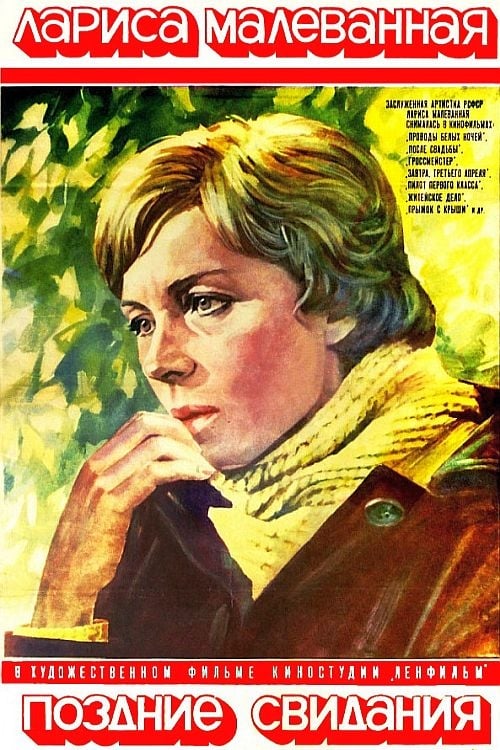
Late Dates is a character study centered on a female protagonist's journey from a rural village to professional success in Leningrad. The film offers a nuanced look at female intellectual ability to act, as the lead character achieves significant academic and socio-economic milestones. However, the film remains largely bound by the demographic and social norms of 1980s Soviet cinema. The narrative focuses on traditional relational structures and lacks diverse representation or queer narratives. While the film critiques the idea that institutional stability guarantees personal happiness, it operates within a very specific, homogeneous cultural framework.
Category Breakdown
The film does not include any explicit references to LGBTQ+ identities or queer narratives. The story revolves around traditional romantic relationships within the societal norms of the time.
The protagonist plays a significant role in driving the story through her academic and professional achievements. However, the plot highlights a tension between her career success and traditional domestic expectations.
The setting in 1980s Leningrad suggests a relatively homogeneous cast. There is no indication of racial diversity or the subversion of ethnic hierarchies.
The narrative explores the transition from rural village life to urban Leningrad. It examines how institutional success interacts with personal fulfillment and traditional roots.
There is no information regarding the inclusion of characters with physical or neurodivergent disabilities.
Present on Screen
Limited or Absent
Official Synopsis
Having arrived from the village to Leningrad, the heroine achieved everything she could dream of: she graduated from the Institute with honors, defended her thesis, built and furnished a cooperative apartment. Only here in private life she was not lucky: for some reason, do not hold near her man…
1979
1986

1987

1962
1984

1978
1989
1982
No reviews yet. Be the first to share your thoughts on this movie!
Use the rating form above to leave a star rating and optional review.