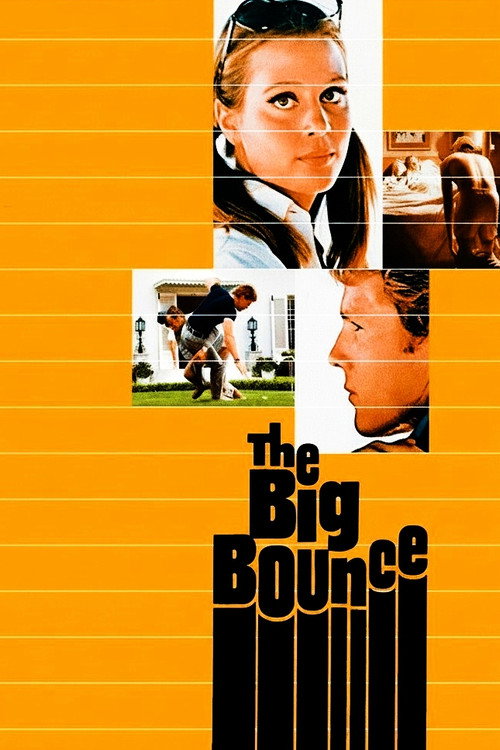
The Big Bounce
1969
No user ratings available yet
Diversity score: 1.6 out of 10

1987
RDirector
Ben Bolt
Runtime
109 minutes
Average Rating
No ratings yetSynopsis
It is 1957. J.C. Cullen is a young man from a small town, with a talent for winning at craps, who leaves for the big city to work as a professional gambler. While there, he breaks the bank at a private craps game at the Gem Club, owned by George Cole, and falls in love with two women, one of them Cole's wife.
Overall Score
Limited
Category Breakdown
LGBTQ+ Representation
The film lacks any evidence of non-heteronormative identities or same-sex intimacy. The story centers on a traditional romantic triangle between a man and two women.
Gender Representation
Women appear within mid-century dramatic tropes rather than as agents of systemic change. The romantic conflict follows conventional patterns without disrupting established masculine leadership roles.
Racial & Ethnic Diversity
The 1957 setting and gambling premise suggest a focus on the dominant social demographics of the era. The narrative appears to reflect the homogeneous social constraints of the period.
Religious & Cultural Diversity
The plot focuses on individualistic pursuits of wealth and gambling. It explores personal ambition and romantic drama rather than critiquing Western institutions or traditional family structures.
Disability Representation
There is no information regarding the inclusion of characters with physical or neurodivergent disabilities.
Strengths
Areas for Improvement
AI Analysis
The Big Town operates within the strict confines of mid-century dramatic conventions. It functions as a character-driven romance that prioritizes traditional social frameworks over progressive storytelling or the subversion of established hierarchies. The narrative relies on a conventional romantic triangle and themes of individualistic social mobility. This focus reinforces the status quo of the 1950s setting rather than challenging it through intersectional lenses. Ultimately, the film lacks intentionality regarding diverse representation. It presents a world shaped by the dominant demographics and social norms of its era, offering little in the way of cultural or identity-based disruption.
1969
1962
1929
1966
1942

1979
1979

1983

1997
1949
1982
1945
No reviews yet. Be the first to share your thoughts on this movie!
Use the rating form above to leave a star rating and optional review.