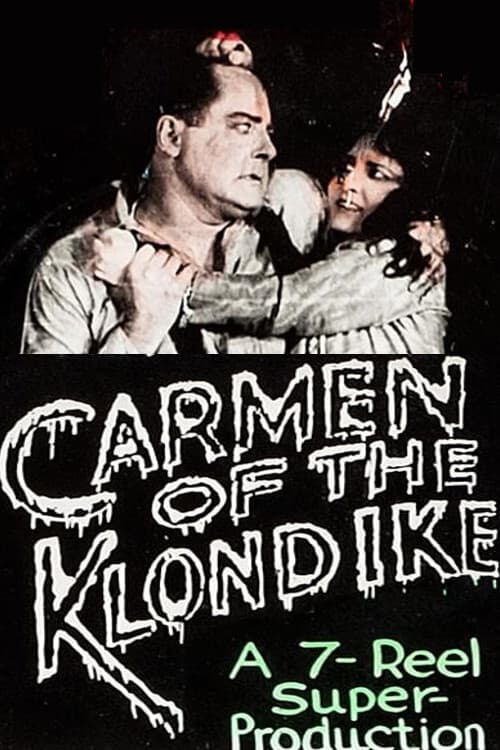
Carmen of the Klondike
1918
No user ratings available yet
Representation score: 0.4 out of 10
Representation Score
Minimal
1915
PassedDirector
Frank Powell
Runtime
50 minutes
Average Rating
No ratings yetNew Showbiz Analysis
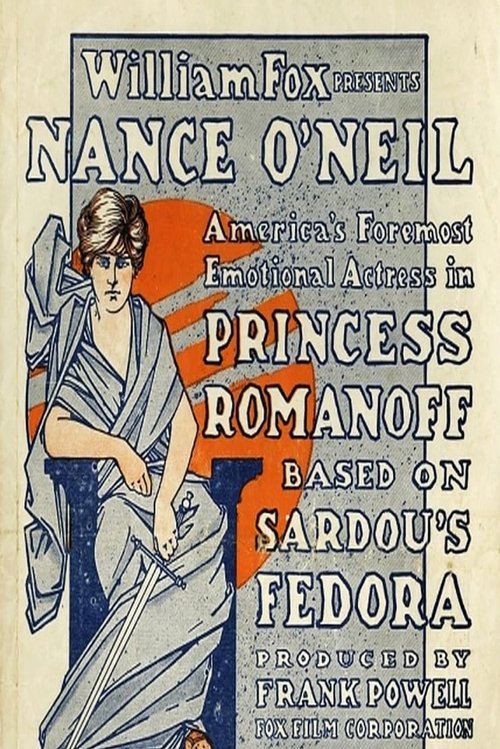
Princess Romanoff is a classic silent-era melodrama that adheres strictly to the social hierarchies of 1915. The narrative focuses on the personal tragedy of the Russian ruling class, prioritizing romantic fatalism over social complexity. The film's structure reinforces traditional gender and racial norms. While the protagonist shows strength through her quest for vengeance, this evolution remains tied to her identity as a grieving widow rather than a challenge to societal roles. Ultimately, the production lacks depth in representing diverse identities or non-traditional social structures, focusing instead on the themes of aristocratic honor and Eurocentric romanticism.
Category Breakdown
The film does not include any queer identities or subtext. The main plot revolves around a heterosexual relationship.
Princess Fedora Romanoff transforms from a gentle widow to a vengeful woman seeking revenge. However, her actions are reactive and tied to the loss of a male partner.
The film features only European nobility, reinforcing a Western-centric view of aristocracy without any non-white representation.
The story centers on the social structures of the Russian monarchy, emphasizing the preservation of individual honor within a traditional imperial order.
There is no representation of physical, sensory, or neurodivergent disabilities in the narrative.
Present on Screen
Limited or Absent
Official Synopsis
Princess Fedora Romanoff, a wealthy, beautiful St. Petersburg widow, is betrothed to Vladimir Boroff, a young man of high social position in the Russian capital. On the eve of their wedding, Vladimir is murdered and Princess Fedora, transformed by the tragedy from a gentle, loving woman into a tigress, vows to devote her life to finding and punishing the slayer of her beloved. Her quest takes her to New York City.
1918
1925
1921

1923
1916
1932
1920
1926
No reviews yet. Be the first to share your thoughts on this movie!
Use the rating form above to leave a star rating and optional review.