
Virtue
1932
No user ratings available yet
Representation score: 1.8 out of 10
Representation Score
Minimal
1925
PassedDirector
Bernard H. Hyman
Runtime
78 minutes
Average Rating
No ratings yetNew Showbiz Analysis
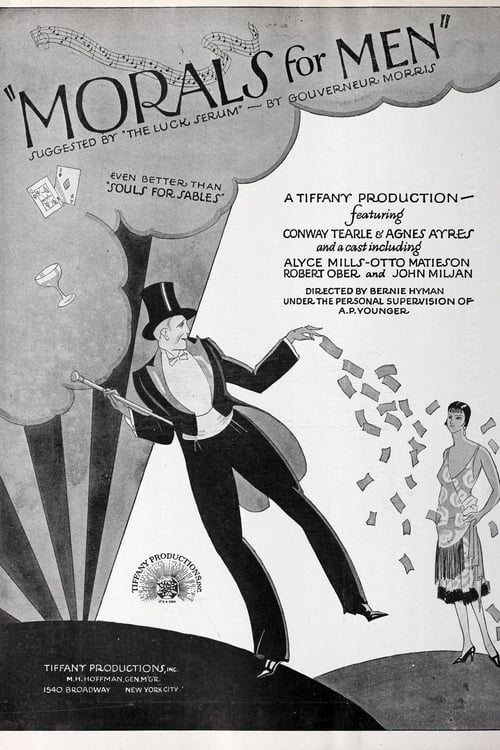
Morals for Men is a period drama that reinforces 1920s social hierarchies. The narrative prioritizes established moral codes and conventional domestic roles over any form of systemic subversion. The film's structure relies on the consequences of deviating from social norms. While it touches on female economic struggles, it ultimately centers on the punitive nature of social reputation and gendered morality. Ultimately, the work serves as a snapshot of traditional dramatic conventions, offering little in the way of diverse representation or perspectives that reflect multiple aspects of identity.
Category Breakdown
The film strictly follows traditional marriage and infidelity themes without exploring non-binary gender identities.
Women navigate social hierarchies and economic struggles but have limited control over their lives, often defined by their relationships to men and societal judgments.
The setting and cast reflect a homogeneous social environment, with the narrative prioritizing class-based mobility over ethnic or racial diversity.
The plot centers on traditional morality and the importance of reputation, reinforcing social policing without challenging institutional moral absolutes.
There are no characters with visible or invisible disabilities, and disability does not serve as a narrative device.
Present on Screen
Limited or Absent
Official Synopsis
Joe (Tearle) and Bessie (Ayres), living in sin and just scraping by. Bessie thinks Joe has stolen their meagre savings, so she leaves him and becomes a manicurist eventually marrying a wealthy man who turns out to be stingy and cruel. Joe saves heiress Marion (Mills) from drowning, makes good as a civil engineer and eventually marries her. Joe and Bessie meet again by chance and Joe, in helping her to keep her secret, incurs Marion's jealousy. Bessie, extorted by a former acquaintance in desperation, decides to tell everything to her husband. However, to aid Joe she accuses Wallace (Miljan), with whom Marion is preparing to go away. Finally, Joe and Marion are reconciled, but Bessie learns that the world never forgives a woman who sins even when she has reformed.
1932

1920
1931
1926
1915
1924
1924
1927
No reviews yet. Be the first to share your thoughts on this movie!
Use the rating form above to leave a star rating and optional review.