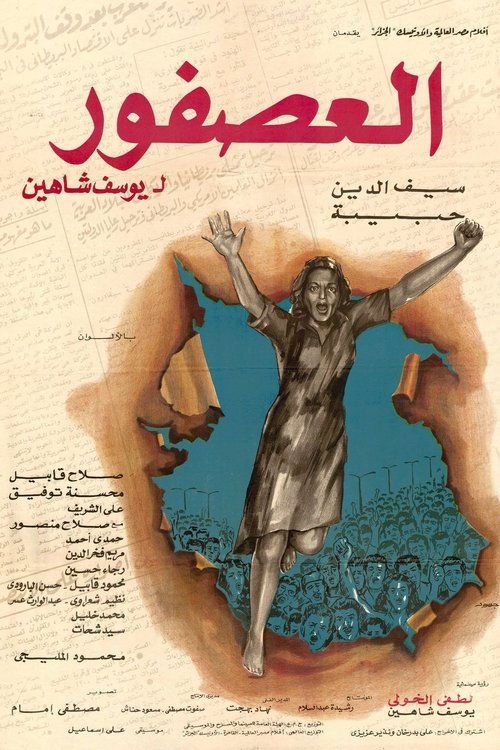
The Sparrow
1972
No user ratings available yet
Representation score: 7.9 out of 10
Representation Score
Good
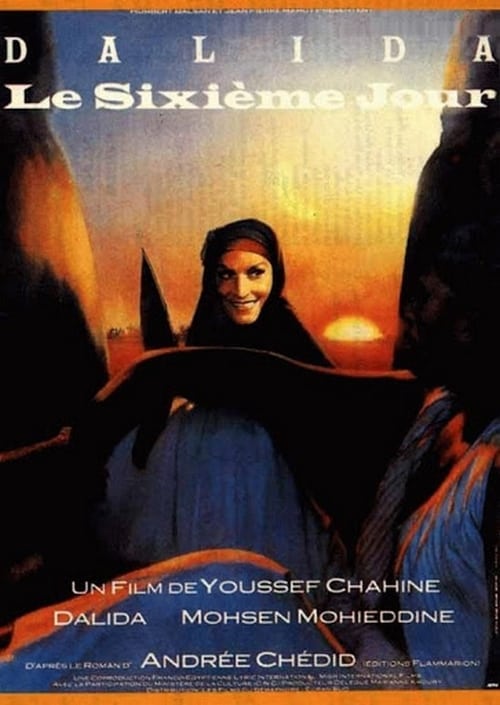
1986
Director
Youssef Chahine
Runtime
105 minutes
Average Rating
No ratings yetNew Showbiz Analysis
Youssef Chahine’s *The Sixth Day* is a powerful exploration of social realism centered around Egyptian identity. By focusing on a washerwoman dealing with a cholera outbreak and unwanted advances, the film effectively challenges patriarchal expectations and Western-centric cinematic structures. While the film excels in cultural authenticity and women's ability to drive the story, it remains limited in its exploration of queer identities and specific disability representation. The narrative prioritizes broader social struggles over individualized depictions of neurodivergence or non-straight-centered lives. Ultimately, the film is a significant work that uses a localized, post-colonial lens to critique systemic hierarchies and celebrate individual autonomy within a complex historical context.
Category Breakdown
The film doesn't include explicit LGBTQ+ stories or non-assuming gender matches what was assigned at birth identities. It focuses on the social pressures of 1947 Egypt.
The film highlights a washerwoman who challenges traditional gender roles. She shows strong ability to act by rejecting a younger suitor, breaking stereotypes of female submission.
The movie features a mostly Egyptian cast, providing an authentic look at the local population. It avoids a Western perspective by using a localized lens to explore social dynamics.
The film examines the tension between personal freedom and oppressive traditions. The cholera outbreak symbolizes systemic vulnerability and the pressures of modernization.
The film uses illness and physical strain as environmental stressors rather than through character's ability to drive the story. There is little individualized portrayal of neurodivergence or chronic conditions.
Present on Screen
Limited or Absent
Official Synopsis
Egypt, 1947: in the midst of a cholera outbreak. A washerwoman tries to take care of her family, while at the same time resisting the advances of a charming suitor who's half her age.
1972

1958
1969

2012

1956

2005

1954

2017
No reviews yet. Be the first to share your thoughts on this movie!
Use the rating form above to leave a star rating and optional review.