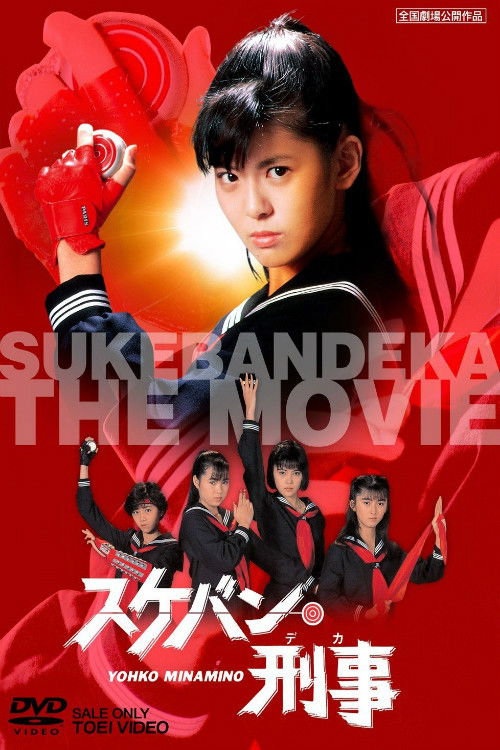
Sukeban Deka: The Movie
1987
No user ratings available yet
Representation score: 4.5 out of 10

Representation Score
Fair
1988
Director
Hideo Tanaka
Runtime
91 minutes
Average Rating
No ratings yetNew Showbiz Analysis
The film excels at challenging traditional gender hierarchies by placing the Kazama sisters at the center of high-stakes combat and political resistance. The narrative uses female autonomy to challenge patriarchal control and systemic corruption. However, the film operates within a narrow demographic framework. It lacks LGBTQ+ representation and multi-ethnic diversity, focusing instead on a culturally specific Japanese setting. Ultimately, the work is a strong critique of institutional stability, though it remains a localized production without significant multi-layered breadth.
Category Breakdown
The film does not include visible LGBTQ+ identities or non-straight romantic arcs. The narrative focuses solely on the sisterhood of the Kazama family.
The story centers on female protagonists who have the tactical ability to combat systemic corruption. It challenges male-dominated action clichés by positioning female autonomy as the primary driver of the plot.
As a localized Japanese production, the film focuses on domestic political intrigue. It lacks diverse racial blending or multi-ethnic casting elements.
The plot critiques institutional power and the corruption of state-sanctioned authority. It celebrates social outsiders and grassroots alliances over established political structures.
There is no evidence regarding the portrayal of visible or invisible disabilities within the provided context.
Present on Screen
Limited or Absent
Official Synopsis
After the events of the previous film, the 17 years-old Sukeban Deka III, Yui Kazama, works for the Juvenile Security Bureau along with her older sisters Yuka and Yuma. This organization is led by politician Kuraudo Sekin, who fights juvenile crime in heavy-handed manners, to the extent to equip his student agents with triple-bladed yo-yo weapons. However, when Sekin's methods become too zealous, Yui quits the bureau and refuses to undertake undercover missions for them. It is soon discovered that Sekin's actual goal is to overthrow the Japanese government, and the Kazama sisters, along with a gang of young outcasts, have to stop him.
1987
1974

2006
1998
1974

2019

1973
1973
No reviews yet. Be the first to share your thoughts on this movie!
Use the rating form above to leave a star rating and optional review.