Aida
1989
No user ratings available yet
Representation score: 5.4 out of 10
Representation Score
Limited
1978
Director
Ernst Wild
Runtime
151 minutes
Average Rating
No ratings yetNew Showbiz Analysis
This production of Verdi's opera preserves high-culture traditionalism. It emphasizes the emotional intensity of 19th-century Romanticism over the subversion of social hierarchies or modern multi-layered complexity. The narrative structure is built around classical archetypes and fatalistic passion. While it includes ethnic elements through the character of Azucena, these are framed through historical clichés of exoticism rather than nuanced identity exploration. Ultimately, the work operates within a highly structured, traditionalist aesthetic, reinforcing conventional Western dramatic structures and patriarchal power dynamics, with minimal representation outside its specific historical and genre-based framework.
Category Breakdown
The story focuses solely on heterosexual relationships and does not include any representation of non-binary gender identities or same-sex intimacy.
The female protagonist Leonora plays a significant role through her emotional sacrifice. However, the narrative reinforces traditional tragic themes where women's roles are defined by self-sacrifice within patriarchal structures.
The character Azucena introduces a non-Anglo-Saxon ethnic element. Her portrayal is rooted in historical clichés of the 'exoticized other,' linked to themes of superstition and ancestral vengeance.
The work is deeply rooted in traditional Western operatic and religious frameworks. It relies on concepts of divine curses and fatalistic morality without challenging Western institutional norms.
There is no representation of physical or neurodivergent disabilities within the cast or character arcs of this production.
Present on Screen
Limited or Absent
Official Synopsis
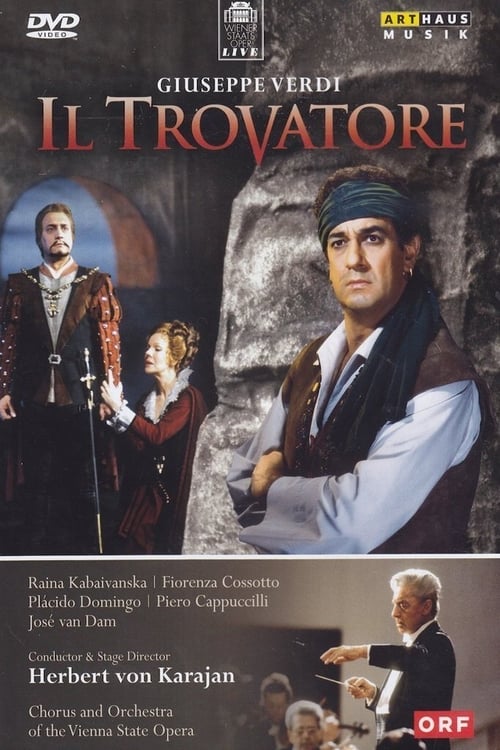
The gypsy Azucena (Fiorenza Cossotto) takes revenge for her mother who was accused of putting a curse on one of the old Count di Luna's two sons: she decides to abduct the younger child and throw it in the flames. But when she is about to carry out this fatal act, the gypsy sacrifices her own child and keeps the old Count’s son, whom she names Manrico (IL TROVATORE, Plácido Domingo). Later, as adults, the troubadour Manrico and the Count di Luna’s elder son (Piero Cappucilli) do not know each other, but become rivals for the beautiful Leonora (Raina Kabaivanska). Manrico succeeds in winning the young woman’s heart, and she sacrifices herself for him, deceiving the Count’s son. Mad with jealousy, the latter orders the execution of the troubadour in front of his mother. Azucena reveals to him that Manrico was his brother. This legendary performance of Giuseppe Verdi's most successful opera was recorded at the Vienna State Opera under the baton of Herbert von Karajan.
1989
1943
1982
2006
1986
1979
2001
1953
No reviews yet. Be the first to share your thoughts on this movie!
Use the rating form above to leave a star rating and optional review.